Marketing Strategy · Updated July 9, 2026
Best Music Marketing Companies for Artists (2026)
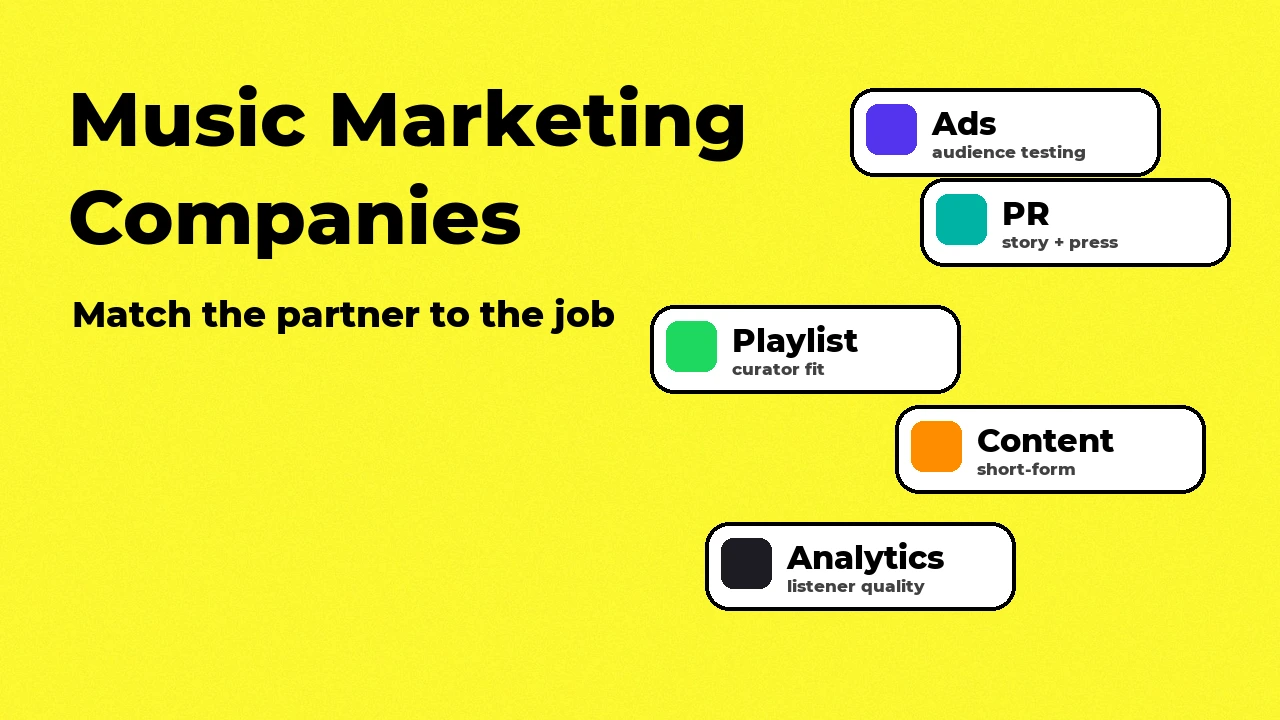
Music marketing companies sell very different services under the same label. One company may run Meta ads. Another may pitch press, playlists, or radio. A full-service agency may handle the release plan, content, paid traffic, fan capture, and reporting.
Pick the company that solves the bottleneck in front of you. Press cannot fix weak audience targeting. Playlist pitching cannot replace content. Cheap streams cannot tell you which listeners will come back for the next release.
Quick answer: the best music marketing company for an independent artist can name the channel, audience source, reporting, risks, and follow-up plan before the campaign starts.
If you are looking for a campaign partner instead of another comparison list, see how simpl. works as a music marketing agency for independent artists. If you are still weighing options, use the checks below to compare us with the other companies.
6 Best Music Marketing Companies for Independent Artists
These companies do different jobs, so there is no honest number-one choice for every artist. simpl. publishes this guide and appears in the table because we provide music marketing services. No company paid for placement. We checked each company's public service pages on July 9, 2026, but offers and pricing can change.
| Company | Best fit | Services listed publicly | Question to ask |
|---|---|---|---|
| simpl. | Independent artists who want Spotify and Meta ads tied to release strategy and listener-quality reporting. | Audience testing, paid ads, content angles, smart links, release planning, and campaign reporting. | Do I have a song, content angle, and budget worth testing? |
| Venture Music | Artists who need broader artist development and a long-term fanbase system. | Artist identity, brand alignment, content, digital advertising, direct-to-fan marketing, and campaign execution. | Do I need full artist development or a narrower release campaign? |
| MusicPromoToday | Artists looking for a broad mix of PR, advertising, creators, social media, and video marketing. | Music PR, advertising, influencer campaigns, social media, TikTok, music video marketing, and direct-to-fan work. | Which channels and deliverables are included in my exact plan? |
| TREND | Artists with a strong story who want publicity, playlisting, or social and artist-identity support. | Publicity, playlisting, social media marketing, artist identity, and targeted media outreach. | How will press or playlist results connect to my wider release plan? |
| Two Story Melody | Independent artists comparing boutique promotion, editorial coverage, EPK help, and Spotify ads. | Blog and PR placements, EPK writing, music-promotion education, and ads-based Spotify promotion. | Am I buying credibility, listener growth, or both, and how will each be measured? |
| Organic Music Marketing | Artists looking for packaged playlist pitching, YouTube advertising, SoundCloud, or digital promotion. | Playlist pitching, YouTube advertising, SoundCloud promotion, music PR, and digital marketing packages. | Where will the audience come from, and what reporting will show listener quality? |
If I were hiring from this list, I would ignore the logo wall for a minute. I would compare two or three proposals for the same job and look for the clearest explanation of the audience source, deliverables, reporting, contract, and next step.
What Does a Music Marketing Agency Do?
A music marketing agency helps artists get the right people to hear, understand, and remember a release. That can mean strategy, paid ads, playlist pitching, PR, content planning, influencer work, radio, email, analytics, or a mix of those things.
Companies use labels such as artist marketing agency, music artist marketing agency, and music promotion company for overlapping offers. Read past the label. You need to know who they reach, how they reach them, what data you get back, and whether any of it helps with the next release.
A good agency should tell you which channel it will use, which listener action it wants, how it will measure the campaign, and what decisions the results can support.
A weak agency hides behind vague words like exposure, buzz, reach, or industry connections. A stronger agency can explain the system in plain English.
Music Marketing Company vs Music Promotion Company
Artists use these terms interchangeably, but they usually mean different things.
| Option | Best for | Risk to check |
|---|---|---|
| Music promotion company | Getting one release in front of more people through playlists, PR, radio, creators, or ads. | The campaign may create short-term attention without a strategy for the next release. |
| Music marketing company | Connecting audience, content, ads, release timing, analytics, and fan follow-up. | The plan can get too broad if the company cannot explain the actual channel mix. |
| Music marketing agency | Building and managing a campaign system with strategy, execution, and reporting. | Some agencies use polished sales copy to hide vague traffic sources. |
If a company only sells streams, views, or playlist placement, treat it like promotion and vet the source hard. If a company talks about positioning, creative testing, listener quality, and what you do after the campaign, you are closer to actual music marketing.
If you are comparing broad promo packages, read the music promotion services guide before paying for a campaign that only promises a bigger number.
Best Music Marketing Companies: What They Usually Specialize In
No company is the best fit for every artist.
The best music marketing agency for one artist might be a PR firm because the artist has a great story and needs press credibility. For another artist, it might be a playlist submission tool because the song fits a niche curator lane. For another, it might be a paid ads partner because the artist needs listener data, audience testing, and repeatable release growth.
Before a sales call, write down the problem you need the agency to solve. Then ask:
- What problem am I trying to solve?
- Does this company specialize in that problem?
- Can they show me where the audience comes from?
- Will I learn something useful even if the campaign is not perfect?
- Do they care about listener quality, or only a bigger-looking number?
That is also why Reddit threads about music marketing agencies can be useful but messy. Artists often post after being burned by guaranteed streams, vague playlist campaigns, or expensive services that did not explain the strategy. Read those threads for patterns, not final answers.
Quick Answer: What Type of Music Marketing Company Should You Hire?
- Need real listener data? Look for a digital advertising or Spotify ads partner.
- Need credibility and story? Look for music PR.
- Need playlist consideration? Look for curator pitching or submission platforms, but avoid guaranteed streams.
- Need regional awareness? Look for radio or tour-support promotion.
- Need licensing revenue? Look for sync representation.
- Need a release system? Look for a partner who connects content, ads, smart links, Spotify data, and post-release follow-up.
For most independent artists, the expensive mistake is hiring a company for the wrong job.
The Main Types of Music Marketing Companies
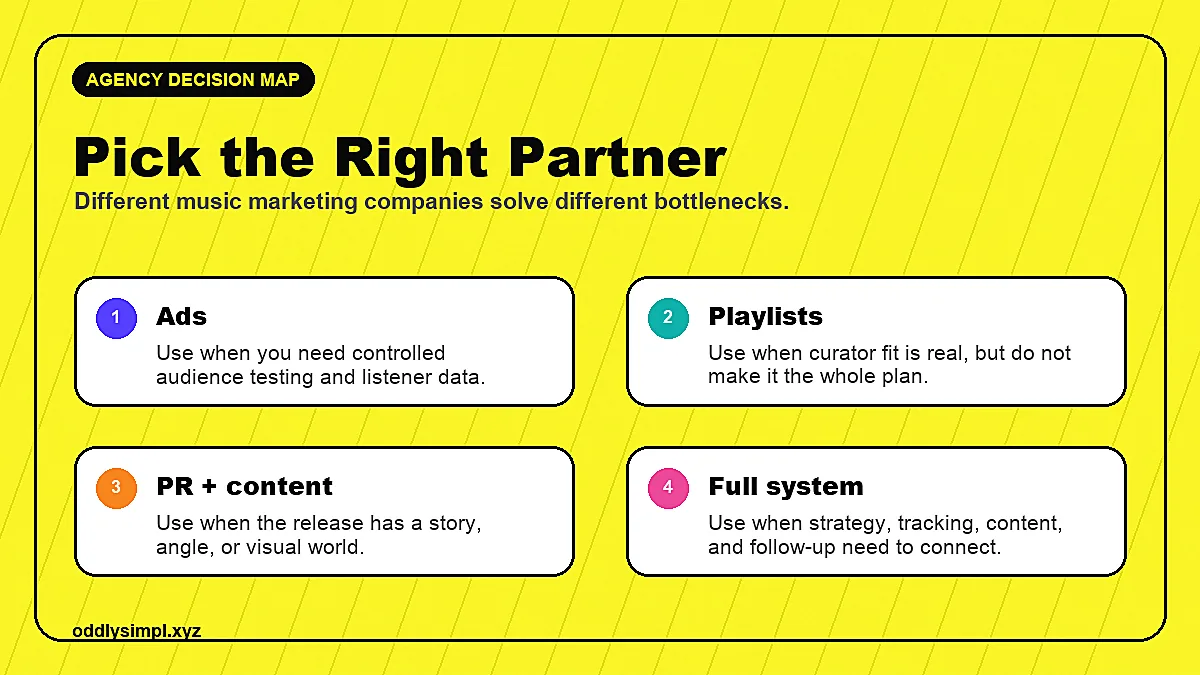
1. Digital Advertising Agencies
Digital advertising agencies run paid campaigns across Meta, TikTok, YouTube, Spotify surfaces, and smart-link funnels.
This is the right category when you need audience testing, listener quality, retargeting, and clear reporting. The point is not cheap clicks. The point is learning who responds to the music and whether they save, follow, replay, or come back.
Use this when you already have a release, content, or audience hypothesis worth testing.
2. Playlist Promotion Companies
Playlist promotion companies pitch songs to independent curators or operate marketplace-style submission networks.
This can help when the playlist fit is real, but it should not be your whole campaign. Playlist listeners are often passive. A placement can create streams without creating fans.
Use this for extra discovery, not as a replacement for your music release strategy. If you are comparing tools, read the Playlist Push alternatives guide.
3. Music PR Firms
PR firms pitch your story to blogs, magazines, podcasts, newsletters, local press, and sometimes larger media outlets.
PR is useful when there is a story worth telling: a strong artist narrative, a visual world, a tour, a cultural angle, a collaboration, or a moment that makes the release newsworthy.
PR is not the same as fan growth. A good article can build credibility. It may not send many listeners by itself.
4. Social Media and Content Agencies
Social agencies help with short-form video, content calendars, influencer work, creative direction, and community management.
This is useful if your music has a clear world but you struggle to translate it into repeatable content. Make sure the agency understands music. Generic social posting is not the same as creating intent around a song.
5. Radio Promotion Companies
Radio promotion still matters for some genres and goals: college radio, AAA, specialty, non-commercial, local markets, or tour support.
Use radio when your genre and release plan fit the format. Do not hire radio promotion because it feels old-school legitimate.
6. Sync and Licensing Companies
Sync companies pitch music for TV, film, ads, games, trailers, and brand placements.
This is a different lane from streaming promotion. It works best when you control the rights, have clean masters, and make music that fits visual media.
How to Vet a Music Marketing Company
Before you hire anyone, ask:
- What exact outcome are we optimizing for?
- Where will the audience or placements come from?
- What reporting will I see besides streams or views?
- Do you guarantee streams, followers, playlist placements, or press?
- How do you avoid fake traffic, bots, and low-quality playlists?
- What happens after the campaign ends?
- How does this help my next release?
A serious company will answer plainly. A risky company will hide behind vague words like exposure, organic growth, viral potential, or industry connections.
Red Flags to Avoid
- Guaranteed streams: real listening behavior cannot be honestly guaranteed.
- Guaranteed Spotify playlist placements: Spotify warns against paid services promising streams or playlist placement.
- No source transparency: you should know where the traffic came from.
- Only vanity reporting: streams, views, and impressions are incomplete without saves, follows, retention, source quality, and baseline lift.
- Same package for every artist: a country artist, metal band, rapper, and bedroom pop artist should not get the exact same plan.
- No post-campaign plan: if the strategy ends when the invoice ends, it is probably not building much.
What Good Reporting Looks Like
A good campaign should help you make better decisions.
Look for reporting around:
- save rate
- follower growth
- streams per listener
- source of streams
- playlist adds from listeners
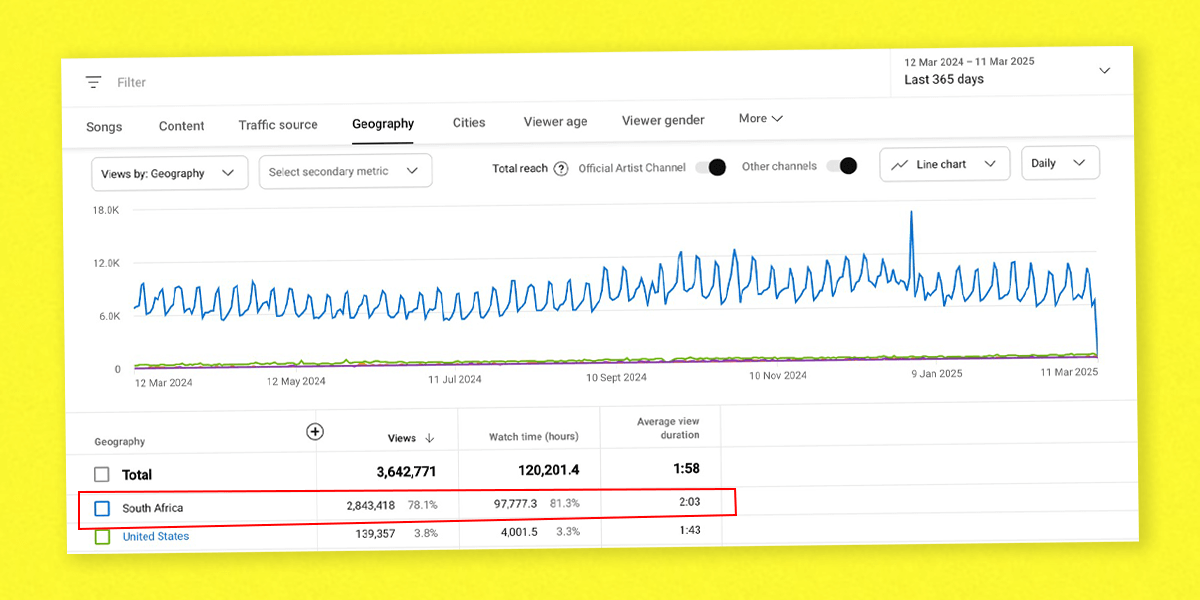
- best cities and countries
- best content angles
- ad creative performance
- post-campaign baseline
This is why music analytics matter. A company that only sends you a screenshot of more streams is not giving you enough information.
Where simpl. Fits
simpl. is a music marketing agency for independent artists who want cleaner listener data, stronger release decisions, and a campaign system that does not depend on fake playlist spikes.
We fit best when an artist wants real listener behavior: Spotify and Meta ads, content angles, smart links, audience testing, release strategy, and reporting that helps the next release get smarter.
That is a good fit if:
- you already have music released or a serious release coming up
- you want to know who your actual audience is
- you care about saves, follows, repeat listening, and clean data
- you do not want fake playlist traffic
- you want each campaign to teach you something useful
It is not a good fit if you only want guaranteed stream numbers, instant fame, or a passive campaign where you never make content.
How to Make the Final Call
You should be able to finish these five sentences before you sign a contract:
- The problem is: awareness, content, listener quality, press, playlisting, radio, sync, or release planning.
- The right specialist is: the company whose main service matches that problem.
- We will judge the campaign by: a metric agreed on before the work starts.
- The main risk is: the weak point you need the company to explain, such as traffic source or playlist quality.
- After the campaign, we will: use the results to change the next release, audience, or creative plan.
If you want the broader foundation first, start with the music marketing strategies guide. If you are comparing promotion packages, read music promotion services for artists. If you are comparing Spotify-specific offers, read Spotify promotion services. If you want help testing audiences and building a campaign around real listener behavior, work with simpl.
Hire the partner that makes your next release less of a guess.
Keep building the strategy
-
Music marketing agency for independent artists
See how simpl. connects Spotify and Meta ads, release strategy, and listener-quality reporting.
-
Music promotion services
Compare Spotify, playlist, TikTok, YouTube, PR, and ads before choosing a channel.
-
Music marketing strategies
Build the full system before choosing a company or channel.
About the author

Anthony Pacheco
Anthony Pacheco is the founder of simpl., a former Sony Music analyst, and a Billboard-charting musician who has helped run 750+ artist marketing campaigns. He writes about real listener behavior, release systems, Spotify ads, and how artists can grow without fake playlist traffic.