Marketing Strategy · Updated July 9, 2026
What Happened to Kreayshawn? Her $800K Sony Debt
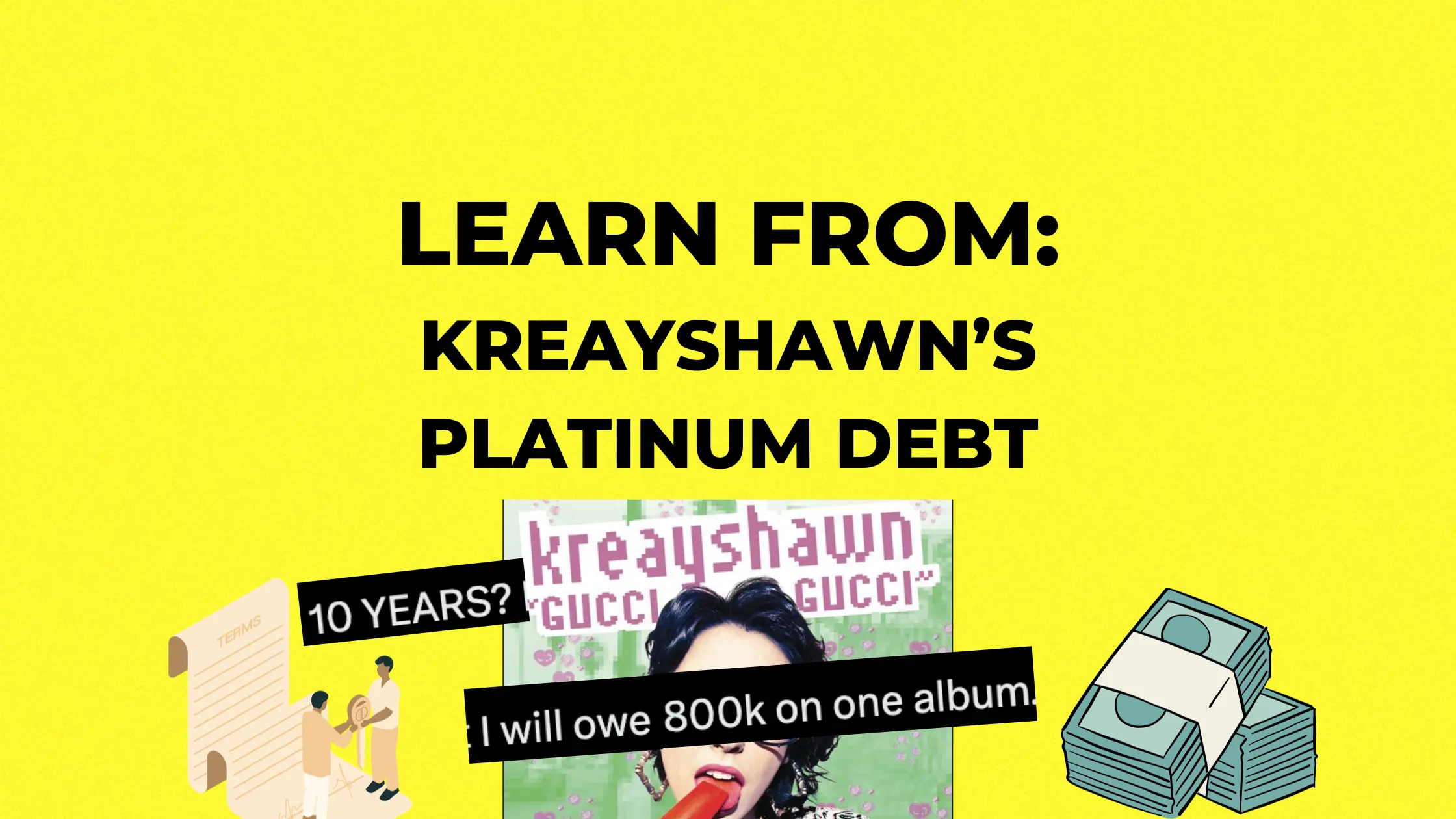
Kreayshawn said she was still $800,000 in debt to Sony years after "Gucci Gucci" made her famous. When the song went platinum in 2023, she posted that the math still did not make sense to her.
Complex reported her 2023 comments, and Kreayshawn told PAPER that she received no royalties from the track while the balance remained.
The word debt needs context. In a record deal, an unrecouped balance usually means the artist's share of master royalties keeps paying down the label's approved costs. It does not usually mean the artist must write the label a personal check if the project never recoups.
A platinum certification tells you a recording moved a lot of units. It does not tell you who owns the master, what the royalty rate was, how much the label advanced, what the video cost, what marketing was charged back, or whether the artist's royalty account ever crossed zero.
"Crazy that I will owe Sony 800k on one album... for 10+ years!" - Kreayshawn (@KREAYSHAWN)
Artists need to understand recoupment, audience ownership, and leverage before signing. A large advance can still leave an artist with little control and no master-royalty payment after the song blows up.
What Happened to Kreayshawn After Gucci Gucci?
Kreayshawn broke out fast with "Gucci Gucci" in 2011. The song became a viral hit, she signed to Sony/Columbia, and the public story looked like the dream version of internet music discovery: one song catches fire, a major label shows up, and the artist becomes a star.
The business story was more complicated. Kreayshawn later said she still owed Sony money even after the song went platinum. The song created real value, while the label royalty account still showed an unrecouped balance. Public success and artist accounting can move in opposite directions.
That is the part independent artists should care about. A viral song can create attention, but leverage comes from ownership, clear accounting, direct fan relationships, and a plan for what happens after the first wave of attention.
How Do Record Label Deals Work?
A record label may offer an artist an advance to record an album, cover living expenses, or support the release. The label then recoups that advance from the artist's royalty account before paying master royalties to the artist.
An advance is not the same as a normal bank loan. The artist usually does not repay an unrecouped balance from personal income. The contract controls the details, and separate obligations can exist, so an entertainment lawyer should explain the exact language before anyone signs.
Recording, mixing, mastering, music videos, tour support, and marketing may also count as recoupable costs. The label fronts the money, then applies the artist's royalty share against the balance.
What Is Record Label Recoupment?
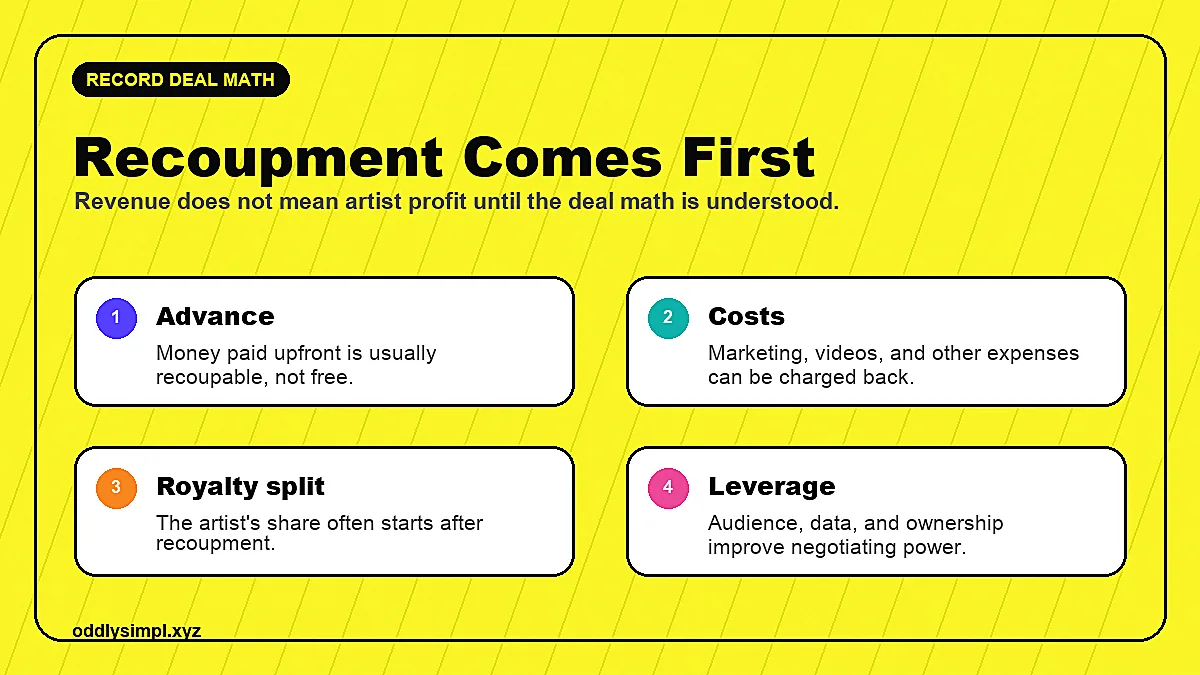
Record label recoupment is the process where the label earns back approved costs from the artist's royalty share before the artist is paid royalties. The important phrase is artist's royalty share. A label can be making money from a release while the artist is still technically unrecouped.
That is why record label debt can feel so strange from the outside. A song can be famous, certified, and culturally loud while the artist's account still shows a negative balance. The public sees the hit. The contract sees the advance, recording budget, video budget, marketing costs, royalty rate, and how the money flows.
This is also why artists should not judge a deal by the advance alone. The bigger question is what you give up to receive it, what costs are recoupable, how transparent the accounting is, and whether the deal helps you build leverage you can keep after the campaign.
The Math Behind Kreayshawn's Situation
Kreayshawn described the balance as roughly $800,000, but the public does not have her full contract and royalty statements. We cannot calculate the account from the platinum certification alone.
The certification measures the recording's commercial activity. Her royalty statement would also reflect the royalty base, artist rate, ownership, approved costs, accounting terms, and money already recouped. Platinum status does not prove the artist received master royalties.
Why Platinum Does Not Always Mean Paid
A certification tells you the recording moved a lot of units. It does not tell you who owned the master, what the royalty rate was, what costs were charged to the artist's account, how publishing was split, whether the deal included 360 rights, or whether old expenses were still being recouped.
That gap is the uncomfortable part of the Kreayshawn story. Visibility and leverage are not the same thing. A viral moment can create attention faster than it creates ownership.
What Independent Artists Should Take From This
Most artists are not deciding between total obscurity and a huge major label deal tomorrow morning. The real decision is how much leverage you build before anyone important shows up with paperwork.
- Know what gets recouped: advances, videos, marketing, tour support, producers, and even some promo costs can come back out of the artist's side first.
- Build audience proof before you negotiate: monthly listeners are useful, but repeat listeners, saves, followers, email signups, merch buyers, and ticket demand give you stronger leverage.
- Own the fan relationship: if all your attention lives inside a platform or a label system, you have less power when strategy changes.
- Use marketing data like a bargaining chip: a clean ad test, a real audience map, and a release history can show where demand already exists.
- Do not confuse spend with strategy: a label or agency budget only matters if it reaches real listeners and builds something you can keep using.
What This Means for You as an Independent Artist
This does not mean you should avoid every record deal. Major labels can provide distribution, press, radio access, and industry relationships that take years to build alone. You still need to understand the contract.
Before you sign anything:
- Hire an entertainment lawyer: use a specialist who reviews music contracts.
- Understand every recoupable cost: ask for the full list in writing.
- Check the royalty rate and base: ask your lawyer to show how the percentage applies to real revenue.
- Ask about 360 rights: identify any claim on touring, merch, publishing, endorsements, or other income.
- Know the exit terms: check release commitments, options, reversion rights, and what happens if the label shelves the music.
Record Deal Due Diligence Checklist
Before you treat any deal as the finish line, ask the boring questions. Boring questions save careers.
- What exactly is recoupable? Get the list in writing: advance, recording, producers, videos, tour support, marketing, playlist promotion, radio, PR, travel, and any overhead fees.
- What is the royalty rate and royalty base? A percentage is meaningless if you do not know what it is calculated from.
- Who owns the masters? Ownership, license length, reversion rights, and options can matter more than the first check.
- What rights does the label touch? Recording income is one thing. Touring, merch, publishing, brand deals, and sync are a different conversation.
- How often do you get accounting? You want reporting cadence, audit rights, and clarity on who can explain the statements.
- What marketing is guaranteed? A vague promise to "push the record" is not the same as a real plan, budget, timeline, and accountable team.
If the answers are fuzzy, slow down. A deal should make your strategy stronger, not replace the need for one.
The Case for Staying Independent
Today, independent artists have more tools than ever to build an audience without a major label. Distribution platforms like DistroKid put your music on every streaming platform. Targeted social media ads can grow your audience faster than radio ever could. And platforms like Bandcamp, Patreon, and Merch by Amazon let you sell directly to fans with no label taking a cut.
The trade-off is that you do more of the work yourself. But you keep far more of the money, and you keep control of your music.
The best independent path is not just "do everything alone forever." It is to build enough proof that every future partner has to respect the leverage you already created. That proof comes from real listeners, clean data, repeatable content, owned fan relationships, and releases that compound.
Kreayshawn Debt and Record Label Recoupment FAQ
Why did Kreayshawn say she owed Sony money?
Kreayshawn said she was still $800,000 in debt to Sony years after "Gucci Gucci" broke out. In label accounting, that can mean her royalty account remained unrecouped, so her share of master royalties continued paying down approved costs instead of reaching her as cash.
What is record label recoupment?
Record label recoupment is the process where a label earns back approved costs from the artist's royalty share. An unrecouped balance usually does not mean the artist must write the label a personal check, but it can prevent the artist from receiving master royalties until the balance reaches zero.
Does going platinum mean an artist gets paid?
No. A platinum certification means the recording reached a sales or streaming threshold. It does not show who owns the master, what the royalty rate is, what costs are recoupable, or whether the artist has already earned back the advance.
What should artists check before signing a record deal?
Artists should hire an entertainment lawyer and check the advance, royalty rate, royalty base, recoupable costs, master ownership, 360 rights, options, audit rights, release commitments, and how marketing spend will be approved and reported.
If you are trying to build that leverage now, start with the music marketing starter kit, map your next campaign with these music marketing strategies, read your audience with music analytics, or use simpl's artist advertising team when you need real listener data before a release.
Keep building the strategy
-
Music marketing starter kit
Build leverage as an independent artist before a label gets involved.
-
Music marketing strategies
Grow without giving away your audience, data, or decision-making too early.
-
Independent artist growth
Use paid campaigns to build a real audience while staying in control.
About the author

Anthony Pacheco
Anthony Pacheco is the founder of simpl., a former Sony Music analyst, and a Billboard-charting musician who has helped run 750+ artist marketing campaigns. He writes about real listener behavior, release systems, Spotify ads, and how artists can grow without fake playlist traffic.