Tools · Updated July 3, 2026
Music Marketing Tools and Starter Kit for Artists
Music Marketing Tools and Starter Kit: The Basics
If you are new to music marketing, do not start by buying every tool, chasing every playlist, or copying whatever an artist on TikTok said worked for them last week. Start with the basics: a clear artist story, clean links, consistent content, a way to measure listener behavior, and one place where fans can hear from you again.
Use this starter kit to choose the tools, channels, and weekly habits that support a real music marketing plan.
- What music marketing is and how it helps each release build on the last one
- Which music marketing help is worth paying for and which parts you can handle yourself
- An overview of the top marketing channels for musicians: social media, content creation, email marketing, and more
- The basic tools you need before you start spending real budget
Quick Answer: What Music Marketing Tools Do Artists Need?
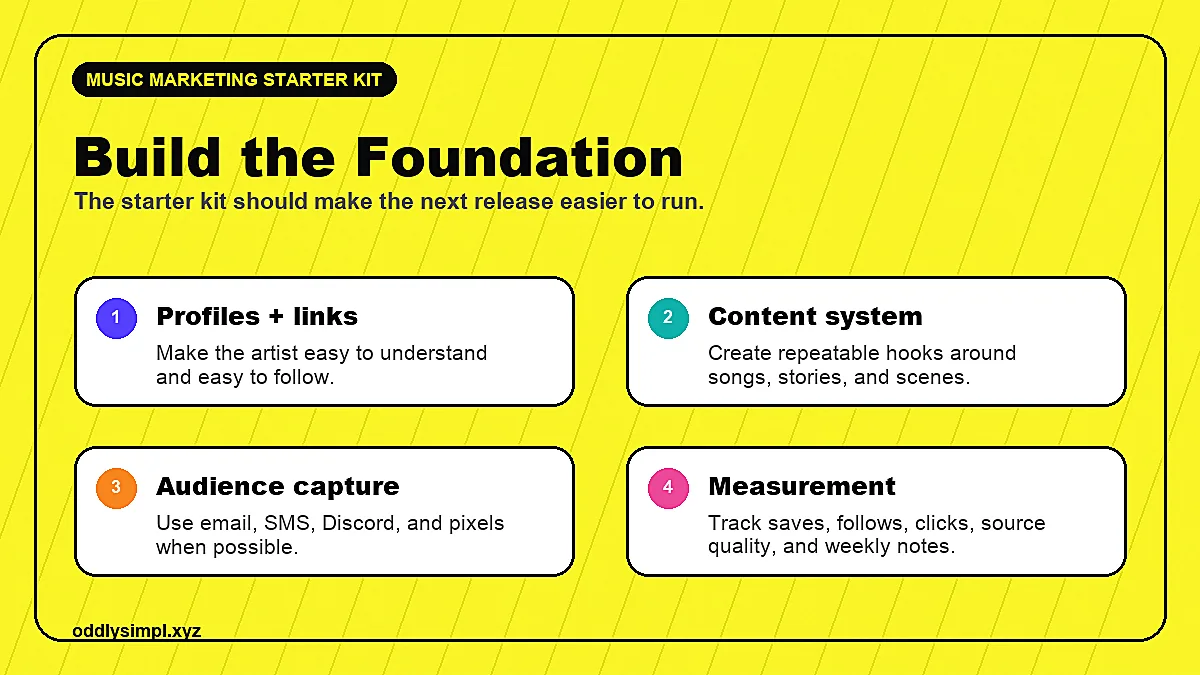
A useful music marketing tools stack for independent artists should include:
- A positioning sentence: who the music is for, what it feels like, and why a stranger should care.
- Streaming profiles: Spotify for Artists, Apple Music for Artists, YouTube, and clean artist bios/photos.
- A smart link: one measurable link for every release, video, pre-save, or campaign.
- A content system: repeatable TikTok, Reels, Shorts, and YouTube ideas that fit the artist's world.
- An owned audience: email, SMS, Discord, or another place where fans are not controlled by an algorithm.
- Analytics: a weekly habit of checking saves, follows, source of streams, clicks, watch time, and audience geography.
- A promotion plan: what happens before release week, during release week, and after the first spike fades.
What Is Music Marketing?
Music marketing is the process of connecting your music with the right people. It covers everything from your social media presence and content strategy to paid advertising, playlist pitching, press outreach, and building a fanbase that shows up for you release after release.
It's not about tricks or shortcuts. It's about understanding your audience, showing up consistently, and building something real.
For the deeper strategy version, read the full music marketing strategy guide. Use this starter kit as the lighter checklist for getting your foundation in place.
Music Marketing Plan: Essential Channels for Musicians
Social Media
TikTok, Instagram, and YouTube are the three most important platforms for most musicians today. TikTok can test discovery, Instagram can build community, and YouTube can give your videos a longer shelf life. Pick the platforms where your audience already lives, then show up with a repeatable system.
Email Marketing
Your email list is the only audience you own. Social algorithms change, platforms come and go, but your email list is yours. Start building it from day one. Use a tool like Mailchimp or ConvertKit, offer something exclusive in exchange for signups, and email your list with releases, announcements, and personal updates.
Streaming Optimization
Your Spotify and Apple Music profiles are storefronts. Complete your bio, add photos, update your Artist Pick, and submit each new release to Spotify editorial. Encourage fans to follow you on Spotify so every new release hits their Release Radar.
Paid Advertising
Facebook and Instagram ads can be useful when you have a strong song angle, clean tracking, and a reason to test specific listeners. Start small, watch saves and follows, and avoid judging the whole campaign by cheap clicks.
Press and PR
Music blogs, online publications, and podcasts in your genre can expose your music to listeners who've never heard of you. Build a list of outlets covering similar artists, craft a compelling pitch, and follow up professionally. Start with smaller outlets and build up as your momentum grows.
Essential Music Marketing Tools
- DistroKid or TuneCore: Music distribution to Spotify, Apple Music, and everywhere else
- Spotify for Artists: Manage your profile and submit releases to editorial
- Meta Ads Manager: Run targeted Facebook and Instagram campaigns
- Feature.fm or Linkfire: Smart links and pre-save campaigns
- Mailchimp or ConvertKit: Email list management
- Canva: Create professional social graphics and artwork
Free Music Marketing Tools to Start With
You can do a lot before paying for a big platform. Start with the free or low-cost tools that help you learn what is working:
- Spotify for Artists: profile control, audience geography, source of streams, playlist data, and release performance.
- Apple Music for Artists: Apple listener data, Shazams, playlist signals, and market information.
- YouTube Studio: search terms, traffic sources, retention, subscribers, and video performance.
- TikTok and Instagram analytics: watch time, saves, shares, comments, profile visits, and link clicks.
- Google Sheets or Notion: campaign calendar, weekly metrics, content ideas, and outreach tracking.
- Canva: fast cover-art variations, social graphics, lyric cards, and simple content templates.
- Beacons, Linktree, Feature.fm, ToneDen, Hypeddit, or Linkfire: link-in-bio, smart links, pre-save links, and campaign tracking depending on your budget.
If you want a deeper breakdown of tracking, use the music analytics guide. If you need release links specifically, use the smart links for music guide.
Best Music Marketing Tools by Job
| Job | Starter tool | What to watch |
|---|---|---|
| Distribute the release | DistroKid, TuneCore, CD Baby, or your distributor | Release date, metadata, artist profiles, and delivery deadlines |
| Plan the campaign | Notion, Google Sheets, or a release planner | Tasks, assets, dates, owners, and weekly next steps |
| Create content | Phone camera, CapCut, Canva, TikTok, Reels, Shorts | Watch time, saves, shares, comments, link clicks, and repeatable hooks |
| Track fan actions | Smart link plus Spotify for Artists | Platform clicks, saves, follows, source of streams, and audience locations |
| Build owned audience | Email, SMS, Discord, Patreon, or community platform | Signups, replies, clicks, buyers, and repeat fan behavior |
| Run paid tests | Meta Ads, TikTok Ads, YouTube Ads, or Spotify ads | Qualified listeners, saves, follows, repeat listening, and post-campaign baseline |
A Simple Weekly Music Marketing Checklist
Keep the starter kit practical. Once per week, do this:
- Pick one goal: more saves, followers, email signups, ticket interest, merch clicks, or qualified listeners.
- Post three to five content tests: lyric hook, story, performance, similar-artist angle, process clip, or fan prompt.
- Check your smart-link data: which platform people chose, where they came from, and whether the click had intent.
- Read Spotify for Artists: source of streams, saves, followers, audience geography, and listener quality.
- Capture fans you can reach again: email, SMS, Discord, merch buyers, show RSVPs, or retargeting audience.
- Write down the lesson: what should you repeat, change, or stop next week?
Most artists do not lose because they lack a secret tool. They lose because every release starts from zero. The starter kit is there to stop that from happening.
Music Marketing Starter Kit FAQ
What should be in a music marketing starter kit?
A music marketing starter kit should include clear positioning, completed artist profiles, smart links, a repeatable content system, owned audience capture, analytics, and a simple promotion plan for each release.
What free music marketing tools should artists start with?
Start with Spotify for Artists, Apple Music for Artists, YouTube Studio, TikTok and Instagram analytics, Google Sheets or Notion, Canva, and a simple smart-link or link-in-bio tool.
Do independent artists need paid ads?
Independent artists do not need paid ads on day one. Ads work best after the artist has a clear song angle, content that creates intent, and a way to measure saves, follows, repeat listening, and source quality.
How do you start marketing music with no audience?
Start by defining who the song is for, posting repeatable content around the song, sending listeners through one clean link, tracking every response, and using the best signal to plan the next week.
Ready to get real help with your music marketing? Work with simpl. We build and run campaigns for independent artists who want real listener data, cleaner Spotify signals, and a release system that compounds.
Keep building the strategy
-
Smart links for music
Choose better landing pages for releases, videos, and fan journeys.
-
Music marketing strategies
Connect your tools to a larger fan-growth system.
-
Spotify ads for artists
Use your analytics to build campaigns around real listener behavior.
About the author

Anthony Pacheco
Anthony Pacheco is the founder of simpl., a former Sony Music analyst, and a Billboard-charting musician who has helped run 750+ artist marketing campaigns. He writes about real listener behavior, release systems, Spotify ads, and how artists can grow without fake playlist traffic.