Marketing Strategy · Updated July 29, 2026
How to Get on Billboard Charts as an Independent Artist
If you are trying to figure out how to get on Billboard charts, start with the boring part: eligibility. A chart push only matters if the activity can be counted inside the right tracking window.
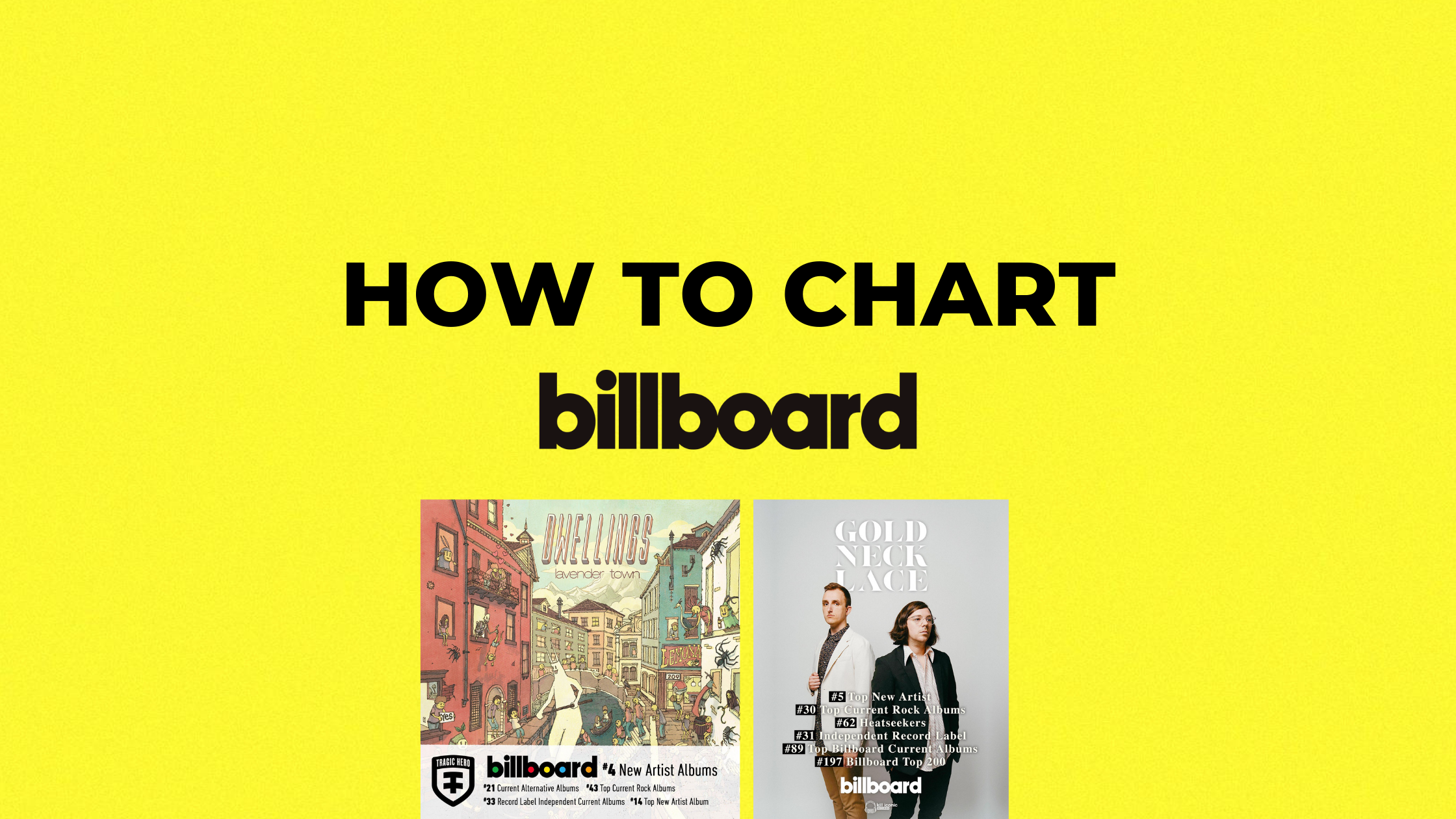
I've charted with my band Dwellings, and I've helped clients build campaigns around chart goals. The artists who give themselves a real shot treat Billboard like an operations problem, not a wish. They register the release correctly, pick the right chart path, build demand before release week, and measure what fans do after they hear the song.
Quick answer: to get on Billboard charts, you need eligible data, a concentrated release week, real fan demand, and a campaign that turns attention into measurable activity: streams, sales, radio, saves, repeat listening, and fan actions that fit the chart you are targeting.
How to Get on Billboard Charts as an Independent Artist
Independent artists can chart on Billboard, especially on genre or emerging-artist charts where the competitive threshold may be more realistic than the Hot 100. The release has to be registered correctly, distributed cleanly, and promoted during the right tracking window.
Do not build the whole campaign around "we need to chart." Build the campaign around fans buying, streaming, saving, sharing, and showing up in ways that count. The chart is the byproduct.
How Billboard Charts Are Calculated
Billboard chart methodology varies by chart, but the major inputs usually include a mix of:
- Streaming activity: activity from online music sources tracked by Luminate.
- Radio airplay: eligible monitored airplay, including data sources connected through Luminate's radio tracking partners.
- Sales: digital and physical products that are properly registered and reported.
Different charts weight inputs differently. The Hot 100 is extremely competitive and broad. Genre charts can be a more realistic target for independent artists with a focused fanbase and a well-timed release.
Billboard Performance Tracking: What to Watch
Billboard performance tracking starts before release day. You need the release registered, the tracking window mapped, and the campaign aimed at fan actions that can count.
| Tracking area | What to check | Why it matters |
|---|---|---|
| Luminate registration | Recordings, products, artists, ISRCs, and UPC/EAN data. | Bad or late metadata can keep activity from being tracked cleanly. |
| Release week | The first chart window after the song or project goes live. | Chart pushes need concentrated demand in the right period. |
| Streaming | Source of streams, repeat listening, saves, and platform mix. | Streams need to come from real listeners, not fake or low-quality traffic. |
| Sales | Digital downloads, physical products, bundles, and reporting path. | Sales only help when they follow current rules and report correctly. |
| Radio | Monitored airplay and format fit. | Radio only matters when the target chart uses eligible airplay. |
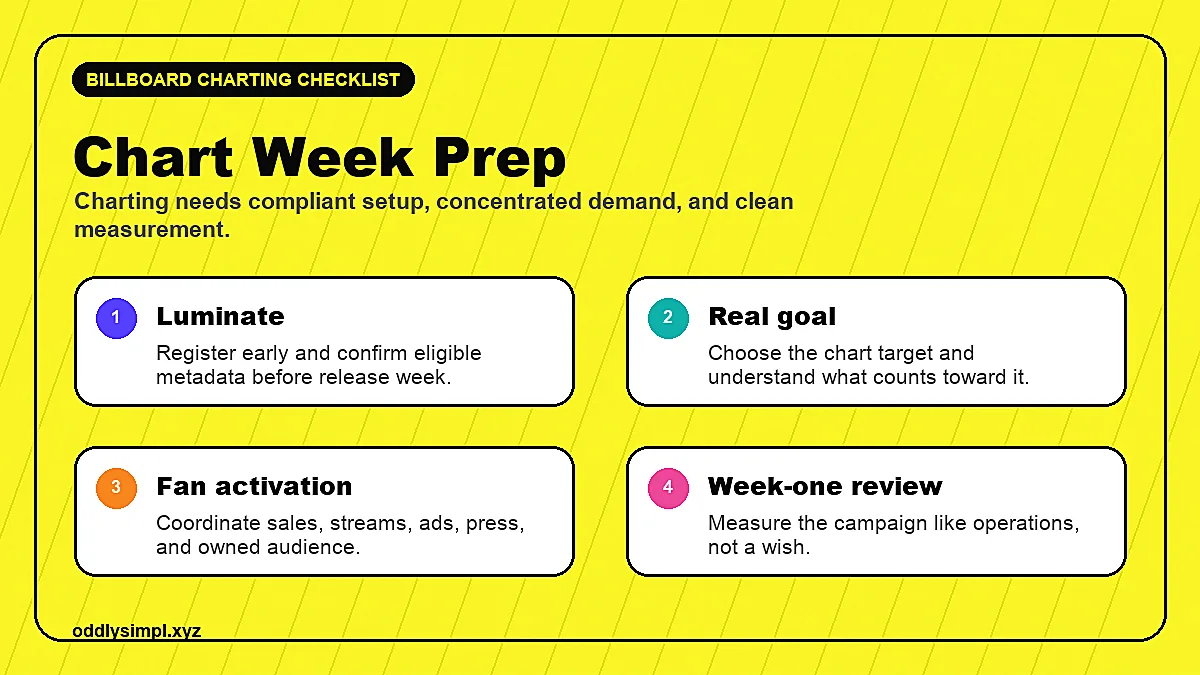
Step 1: Register the Release with Luminate Early
Luminate is the data provider behind much of the industry reporting that feeds chart eligibility. Luminate says recordings, products, and artists need to exist in its database with the right metadata, and it recommends registering products and recordings at least one week before street date so tracking can start on day one.
That means you should verify the boring stuff before the exciting stuff:
- ISRCs for the recordings
- UPC/EAN or product barcode for albums, singles, EPs, vinyl, CDs, or other products
- artist metadata
- release date and title formatting
- direct-to-consumer sales reporting, if you are selling outside normal DSP/distributor channels
Your distributor may handle parts of this automatically, but "probably" is not a chart strategy. Check before release week.
What Are Billboard Charts?
Billboard charts are ranked lists that show which songs, albums, and artists generated the most eligible activity during a tracking period. The exact formula depends on the chart, but the basic idea is simple: Billboard uses reported consumption data to compare releases against each other inside a defined window.
That is why artists need to choose the right chart before planning the campaign. A genre chart, Heatseekers-style opportunity, or emerging-artist lane may be more realistic than chasing the Hot 100. The strategy changes when the goal changes.
How Does the Billboard Hot 100 Work?
The Billboard Hot 100 ranks songs across the broadest mainstream market. It weighs eligible streaming activity, radio airplay, and sales, then compares songs against every other eligible song in that chart period. That makes it a brutal target for most independent artists.
The useful lesson: pick the chart that matches your audience proof. A focused rock, alternative, Latin, country, Christian, dance, or emerging-artist lane can make more sense than building a whole campaign around the Hot 100 before your fanbase is ready.
How Do Billboard Charts Work?
Billboard charts work by combining eligible activity from sources such as streaming, radio, and sales. Luminate helps collect and process a large part of that reporting. If your release is not set up correctly, or your activity happens outside the tracking window, the campaign can look busy without helping the chart path.
For an independent artist, the practical question is not "how do I hack the chart?" The better question is: which fan action are we trying to create this week? If the target chart depends on sales, the campaign needs a clear sales path. If the target depends on streaming, the campaign needs repeat listening, saves, and fans who come back after the first click.
Step 2: Build the Release Week Around a Real Goal
Billboard chart weeks are driven by activity inside a defined tracking period, so your release campaign needs to peak in the right window. Friday releases still matter because they give you a full standard release week to build activity.
The mistake is trying to optimize for everything at once. Pick the main chart path before you spend money:
- Streaming push: content, ads, playlist strategy, and fan reminders designed to create repeat listening and saves.
- Sales push: digital downloads, physical product, bundles that follow current rules, and direct fan messaging.
- Radio/press push: the right stations, blogs, podcasts, and genre outlets before the release goes live.
Step 3: Use Ads to Find Real Listeners, Not Fake Momentum
Well-targeted ads can support a chart push, but only when they send the right people to the right action. A stream from someone who saves, follows, and replays is more useful than cheap traffic that disappears after the click.
For most independent artists, the smartest setup is a coordinated campaign: short-form content for awareness, Meta or YouTube ads for targeting, smart links for tracking, and Spotify/Apple/YouTube analytics to judge whether the traffic is becoming listener behavior.
What Not to Do During a Billboard Push
Do not buy streams, fake downloads, playlist placements, or bot traffic because someone says it will help the chart. Bad activity can waste money, damage your listener data, and put the release at risk.
Do not wait until release day to decide the target chart. If the campaign needs sales, fans need clear purchase options before the tracking week starts. If the campaign needs streaming volume, you need content, ads, email, and fan reminders already lined up.
And do not let the chart goal erase the artist goal. A chart placement is useful only if it brings better press, stronger booking conversations, or a fanbase that keeps showing up after the week ends.
Step 4: Do Not Overrate Pre-Saves
Pre-saves can help your warm audience remember the release. They can also support Release Radar exposure and fan-data collection if your link tool captures useful information. But pre-saves alone do not make a Billboard campaign.
If your chart push depends entirely on pre-saves, you probably do not have enough demand yet. Use the pre-save as one piece of the launch, then focus release week on listening, saving, buying, sharing, and repeat engagement.
Step 5: Measure the First Week Like a Campaign, Not a Wish
During release week, watch the metrics that show whether the campaign is compounding: stream sources, save rate, followers, playlist adds, sales, city data, link clicks, email clicks, and which creative angles are moving people.
If the first 48 hours show weak listener quality, adjust the campaign. Shift budget to the best creative, simplify the link path, email your warmest fans, or change the call to action from "stream now" to the action that matters for the chart path you chose.
Quick Billboard Charting Checklist
- Register recordings/products with Luminate at least one week before release.
- Verify ISRCs, UPC/EAN, artist metadata, and release title formatting.
- Choose the target chart and the main activity you need: streams, sales, radio, or a mix.
- Build a release-week plan before the song drops.
- Use ads and content to drive real fan actions, not vanity traffic.
- Track smart-link clicks, stream quality, saves, follows, sales, and city data every day.
If charting is part of your release goal, start with the full music release strategy, keep expectations realistic with the pre-save campaign guide, use music analytics to judge listener quality, and use simpl's release campaign team when you need ads, reporting, and release-week execution tied together.
Keep building the strategy
-
Music release strategy
Coordinate release week, ads, content, and analytics before a chart push.
-
Pre-save campaign guide
Build first-week momentum without overrating pre-saves.
-
Release campaign help
Run a full release campaign with paid ads, content, and data working together.
About the author

Anthony Pacheco
Anthony Pacheco is the founder of simpl., a former Sony Music analyst, and a Billboard-charting musician who has helped run 750+ artist marketing campaigns. He writes about real listener behavior, release systems, Spotify ads, and how artists can grow without fake playlist traffic.