Pre-Save · Updated July 9, 2026
Spotify Pre-Save Link: Meaning and Campaign Guide

A Spotify pre-save link is a pre-release page where fans can save your song before it comes out. On release day, the tool adds the song to their Spotify library or release destination.
That sounds small, but it can still be useful when the link sits inside a real release plan: content that makes people care, fan capture, smart links, follow-up, and clean post-release measurement. A pre-save is a reminder and data point. It is not a cheat code.
Spotify Pre-Save Link: Quick Setup
To create a Spotify pre-save link, deliver the release early, choose a pre-save tool, connect the Spotify URI or release data, test the page on mobile, and switch the campaign to a live smart link when the song is out.
- Deliver the release early: give your distributor enough time to send the track to Spotify before you start pushing the link.
- Choose the tool: use Spotify Countdown Pages when eligible, a distributor tool for a basic campaign, or a platform like Laylo, Feature.fm, Linkfire, ToneDen, Hypeddit, or HyperFollow when you need fan data.
- Connect Spotify: add the Spotify URI, UPC, ISRC, or distributor connection the tool requires.
- Test the link: check mobile layout, button copy, authorization flow, pixels, email/SMS capture, and release date.
- Plan the follow-up: send fans to the live release on release day, then measure saves, follows, repeat listening, email/SMS opt-ins, and click sources.
How Many Pre-Saves Is Good for Spotify?
A good Spotify pre-save number depends on the size and warmth of your audience. For a developing artist, 25-100 real pre-saves from actual fans can be useful. For an artist with a larger audience, 500+ real pre-saves may be a healthy signal. But 50 fans who are excited enough to listen, save, and share on release day are worth more than 500 cold clicks from people who never come back.
Use pre-saves as a quality signal, not a vanity metric. The better question is: did those people listen on release day, save the song, follow you, add it to playlists, or help create momentum you can see in Spotify for Artists?
Pre-Save Meaning: What Does Pre-Save Mean on Spotify?
A Spotify pre-save means a fan saves an unreleased song or project before it comes out. On release day, the pre-save tool adds the release to the fan's Spotify library or chosen destination, depending on the platform you used.
Spotify pre-saves are not the same as Spotify followers, playlist adds, or editorial pitches. A pre-save is a fan reminder and data point. It can help you nudge warm listeners on release day, but it does not replace content, Release Radar, smart links, ads, or real audience demand.
If fans keep asking "what does pre-save mean," explain it in plain language: it is free, it takes a few seconds, and it helps them remember the song when it drops. Do not oversell it as an algorithm hack.
What Is a Pre-Save?
A Spotify pre-save works like a pre-order for streaming. A fan clicks your pre-save link, authorizes their Spotify account, and your release is automatically added to their library on release day. It also appears on their Release Radar, Spotify's weekly personalized new releases playlist. The goal is Day 1 momentum: more saves, more Release Radar placements, more algorithmic visibility.
Best Practices for Pre-Save Campaigns
Promote Your Release Without Exhausting Fans
Your pre-save campaign should excite people, not exhaust them. Tease the music, share behind-the-scenes content, tell the story behind the song. Give fans a reason to want the release in their library. One ask per day is too much. A few strategic posts over your campaign window is right.
Explain What You're Asking For
Many fans have no idea what a pre-save is. Tell them exactly what happens when they click: "It adds my song to your Spotify library automatically on release day and puts it on your Release Radar playlist. It's free and takes 10 seconds." When fans understand the value, they're more likely to follow through.
The Truth About Pre-Saves
Pre-saves do not directly influence editorial playlist consideration the way many artists believe. The official Spotify editorial playlist pitch still happens through Spotify for Artists, and a pre-save count is not a replacement for a strong pitch, a real audience, and a song people respond to. Run your pre-save campaign, but do not tie your release strategy success or failure to pre-save counts.
Are Pre-Save Campaigns Worth It?
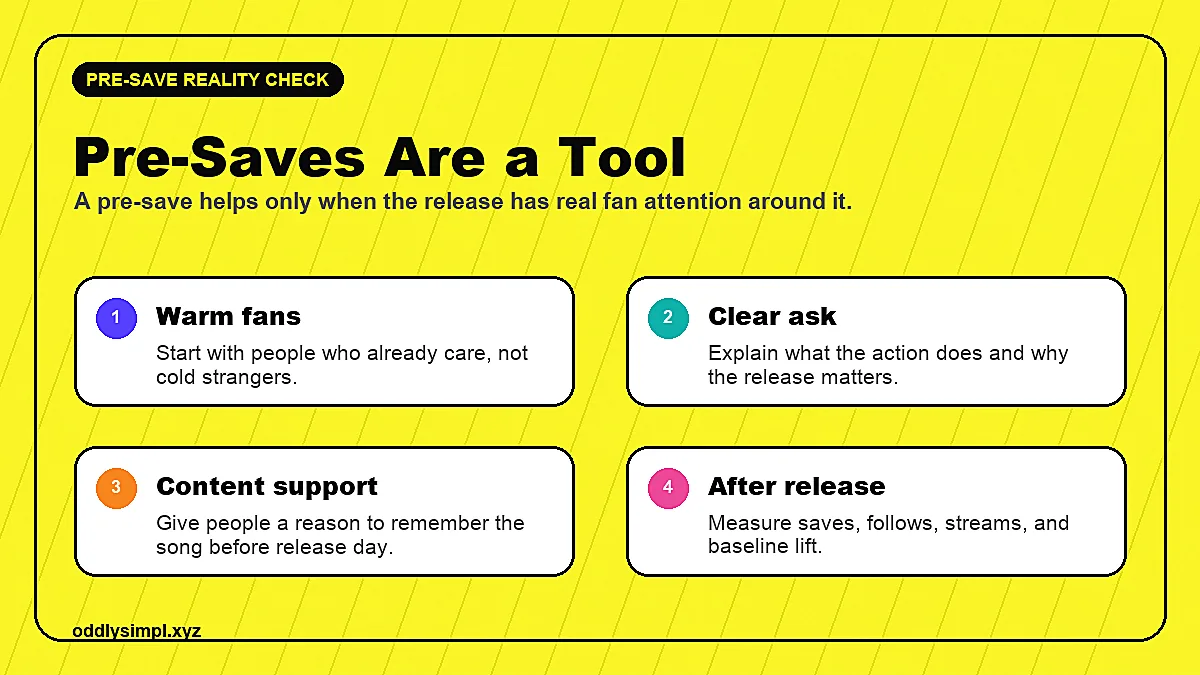
Pre-save campaigns are worth it when they support a bigger release plan. They are not worth it when the entire strategy is "please click this link" for three weeks.
A useful campaign does at least one of these jobs:
- Reminder: warm fans do not forget the release when Friday comes around.
- Fan data: your smart-link or pre-save tool captures emails, pixels, geography, click sources, or platform intent.
- Release-week lift: pre-savers are more likely to listen early, save again, share, or respond when you follow up.
- Storytelling: the campaign gives you a reason to explain the song before it drops.
If you are buying cold traffic to inflate a pre-save number, it is probably not worth it. You are teaching the algorithm and your own dashboard almost nothing. If you are activating people who already care, a pre-save can be a helpful release-week nudge.
Pre-Save Campaign Ideas That Do Not Feel Desperate
The best pre-save campaign ideas make the song more interesting before someone hears the full version. Try angles like:
- The lyric hook: post the one line that explains the emotional center of the song.
- The voice memo: show the first demo, studio clip, or writing note that became the final record.
- The fan choice: let people vote on a cover detail, live version, merch idea, or visual clip.
- The behind-the-song story: explain who or what the song is about without turning it into a press release.
- The private reward: offer a demo, acoustic clip, early video, or close-friends update for people who support early.
- The release-week promise: tell fans exactly what will happen after they pre-save: live stream, video, visualizer, lyric breakdown, or email drop.
Notice the pattern: the link is not the content. The link is the next step after the content makes somebody care.
Free Spotify Pre-Save Campaign Options
You do not need an expensive stack to start. Free or low-cost pre-save options come from your distributor, a smart-link platform, or Spotify's own album/EP release tools.
Spotify Countdown Pages are Spotify's native pre-release destination for eligible album and EP releases. Spotify says Countdown Pages let fans pre-save, preview tracklists, watch countdown videos, and stream on day one. For singles or artists who are not eligible, use a third-party pre-save or smart-link tool.
Common options artists compare include Laylo, Feature.fm, Show.co, ToneDen, Hypeddit, Linkfire, and HyperFollow. The best tool is the one that gives you a clean fan experience and useful data, not the one with the flashiest landing page.
Look for:
- Email or pixel capture if you plan to follow up.
- Clear analytics by source, platform, and geography.
- A release-day switch from pre-save page to live smart link.
- Terms that make fans comfortable authorizing their account.
If you are deciding between link tools, the smart URL guide for musicians explains what to look for after the pre-save flips into a live release link.
Where Laylo Fits in a Pre-Save Campaign
Laylo's pre-save docs explain the thing artists should understand about every third-party pre-save tool: Spotify is not watching a pre-release counter. The tool stores the fan's Spotify authorization, then saves the track when the release is live.
Laylo is interesting because the pre-save can sit inside a Drop page with phone, email, and notification behavior around it. That makes it less like a pure streaming button and more like a fan-capture moment. A fan can pre-save, get notified by text or email, and stay reachable for the next release if they opt in.
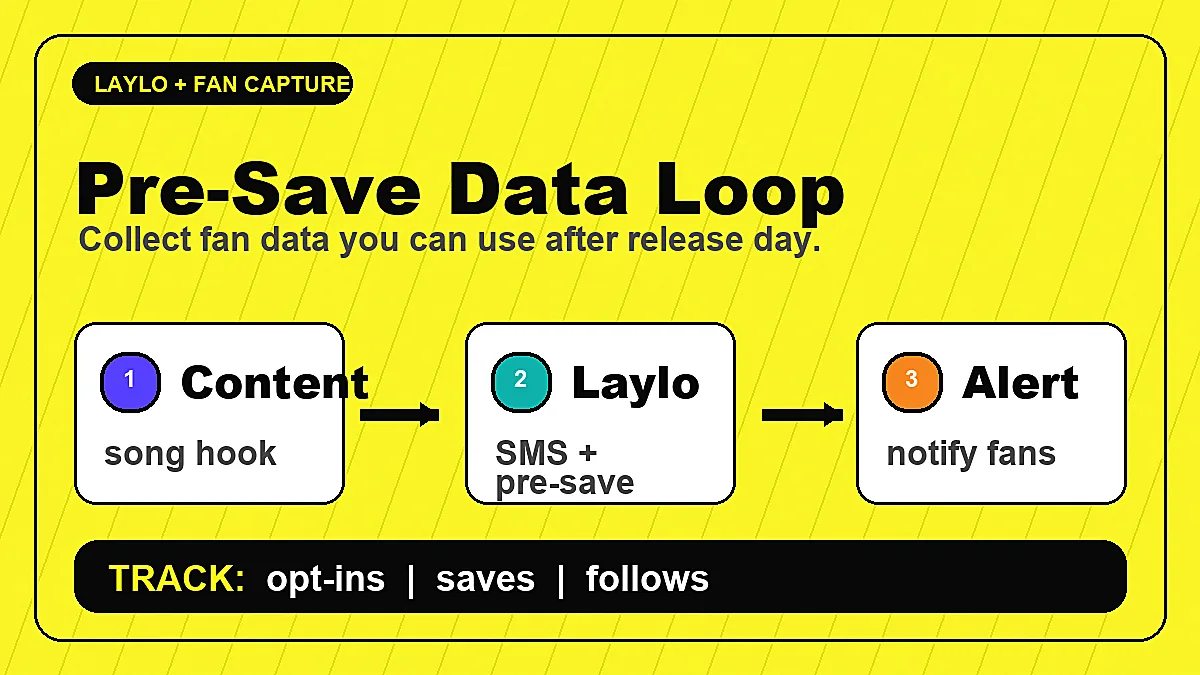
Use Laylo when first-party data matters: SMS, email, release alerts, and future fan communication. Use a simpler distributor pre-save when you only need the basic Spotify action. Use a deeper smart-link platform when analytics and platform routing are the bigger job.
Laylo vs Feature.fm vs Linkfire vs Hypeddit
The best pre-save tool depends on the job. Do not pick based on the prettiest page. Pick based on what you need to learn and what you plan to do with the fan after release day.
| Tool | Best fit | Watch out for |
|---|---|---|
| Laylo | pre-saves tied to SMS, email, Drop pages, and fan reminders | less focused on pure streaming attribution than Linkfire or Feature.fm |
| Feature.fm | music smart links, pre-saves, future saves, bio links, contests, and fan capture | more features than some artists need for one simple release |
| Linkfire | smart links, attribution, music release links, pre-saves, and team reporting | can feel heavier if you only need an artist-level pre-save page |
| Hypeddit | pre-save links, smart links, download gates, and fan-action campaigns | pages can get cluttered if every gate and action is added at once |
| Spotify Countdown Pages | native Spotify pre-release pages for eligible albums and EPs | not the same as owned SMS or email capture, and not always available for singles |
Make the Song About the Fan
The most effective pre-save campaigns give fans a reason to care. What will they feel when they hear this song? What story does it tell? What does it mean to you? Make the pre-save the conclusion of a story, not the beginning of a sales pitch.
How to Create a Pre-Save Campaign
- Deliver the song early. Give your distributor enough time to deliver the release and make the Spotify URI/links available before you start promoting.
- Choose the pre-save path. Use Spotify Countdown Pages if the release is eligible, your distributor's tool if it is simple, or a smart-link platform if you need fan data and pixels.
- Build the landing page. Add the title, artist name, cover art, release date, short copy, and the clearest call to action.
- Connect the release. Add the Spotify URI or distributor connection once it is approved, then test the page on mobile.
- Set the follow-up path. Decide what happens on release day: email, text, retargeting ad, story post, live stream, or direct fan message.
- Promote in waves. Start with the story, then the hook, then the reminder. Do not post the same graphic every day and call it strategy.
- Switch to a smart link on release day. Once the song is live, send fans to the release, not the old pre-save ask.
Spotify also recommends delivering music at least 7 days before release to be eligible for first-week Release Radar consideration. Build that timing into the release plan instead of setting up your pre-save at the last second. If you are rolling multiple singles into one project, pair this with a waterfall release strategy so each song has its own promotion window.
What to Track After the Campaign
Do not judge the campaign by pre-save count alone. Track what happens after the song is live:
- How many pre-savers became first-week listeners?
- Did saves, follows, playlist adds, or repeat listens move?
- Which content angles drove the most clicks?
- Which countries, cities, or platforms showed real intent?
- Did your baseline improve after release week, or did everything disappear?
Pre-saves become useful when the campaign shows which fans and messages you can carry into the next release. The number is not magic. Use music analytics to compare pre-save clicks, release-day listeners, saves, follows, and repeat streams instead of stopping at the headline count.
Spotify Pre-Save Campaign FAQ
How many pre-saves is good for Spotify?
A good Spotify pre-save number depends on the size and warmth of the artist's audience. For a developing artist, 25-100 real pre-saves from actual fans can be useful. For a larger artist, 500+ real pre-saves may be healthy if those fans listen, save, and come back after release day.
What is a Spotify pre-save?
A Spotify pre-save works like a pre-order for streaming. A fan authorizes their account before release day, then the release is added to their library or release destination when it goes live.
What does pre-save mean?
Pre-save means a fan saves an unreleased song or project before release day. When the release goes live, the tool adds it to the fan's Spotify library or chosen destination based on the campaign setup.
Are pre-save campaigns worth it?
Pre-save campaigns are worth it when they support a bigger release plan by reminding warm fans, collecting useful fan data, creating release-week lift, and giving the artist a reason to tell the song's story before it drops.
How do you pre-save a song on Spotify?
A fan pre-saves a song by clicking the artist's pre-save link, authorizing their Spotify account, and confirming the save before release day. When the track goes live, the tool adds it to their library or release destination based on the campaign setup.
How do you make a Spotify pre-save link?
Artists make a Spotify pre-save link through an eligible Spotify Countdown Page, a distributor tool, or a third-party smart-link platform. Deliver the release early so the tool can connect to the Spotify URI or release data.
How do you get a Spotify pre-save link?
You get a Spotify pre-save link by delivering the release early, choosing a pre-save tool, connecting the Spotify URI or release data, testing the page on mobile, and sharing the link before release day.
Is Laylo good for pre-save campaigns?
Laylo can be a good pre-save tool when the campaign needs SMS, email capture, Drop pages, fan notifications, and release-day follow-up. It is strongest when the artist already has warm fans to activate.
Why does first-party data matter for pre-save campaigns?
First-party data matters because artists need a way to reach fans after the first click. Email, SMS, source tracking, and platform-choice data help connect pre-release attention to release-day action and future campaigns.
Need help with your full release strategy, from pre-save to post-release push? Work with simpl.
Keep building the strategy
-
Music release strategy
Place pre-saves inside the bigger pre-release and release-week plan.
-
Music release planner
Map the content, pre-save, and launch tasks in one timeline.
-
Release campaign help
Use ads and data to support release week after the pre-save ends.
About the author

Anthony Pacheco
Anthony Pacheco is the founder of simpl., a former Sony Music analyst, and a Billboard-charting musician who has helped run 750+ artist marketing campaigns. He writes about real listener behavior, release systems, Spotify ads, and how artists can grow without fake playlist traffic.