Music Industry · Updated July 3, 2026
AI Music Distribution: What Independent Artists Need to Know
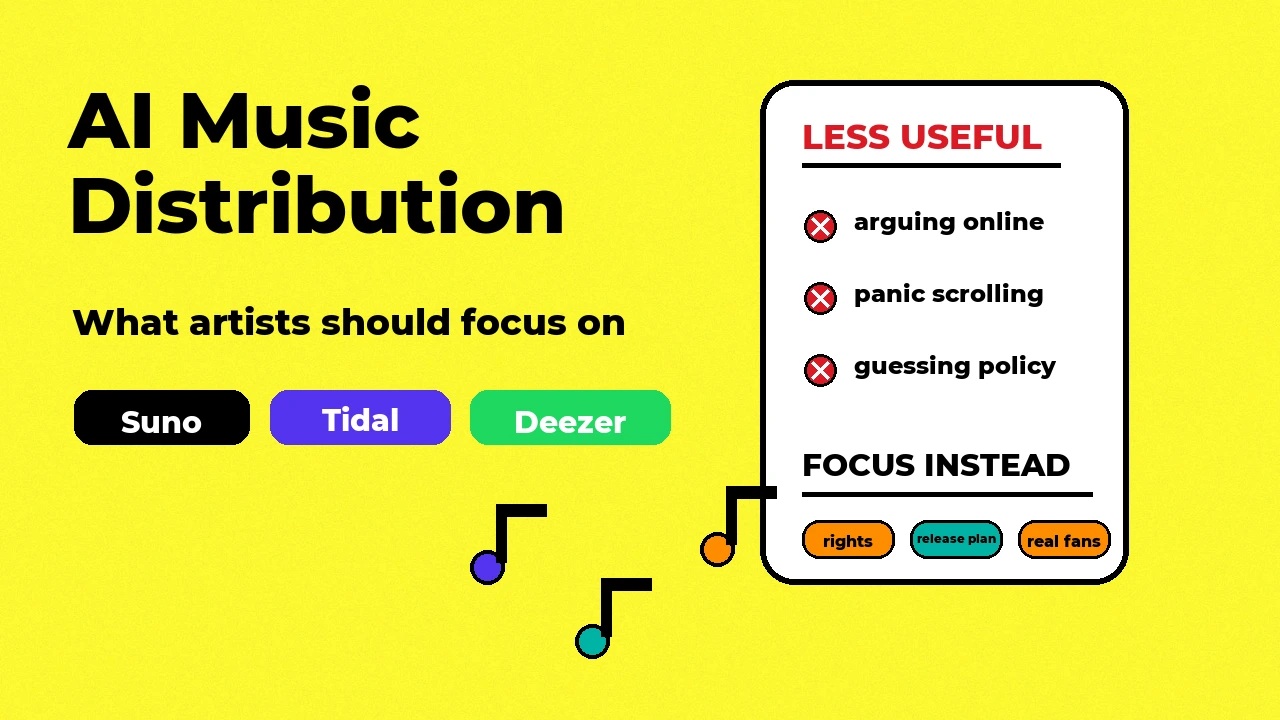
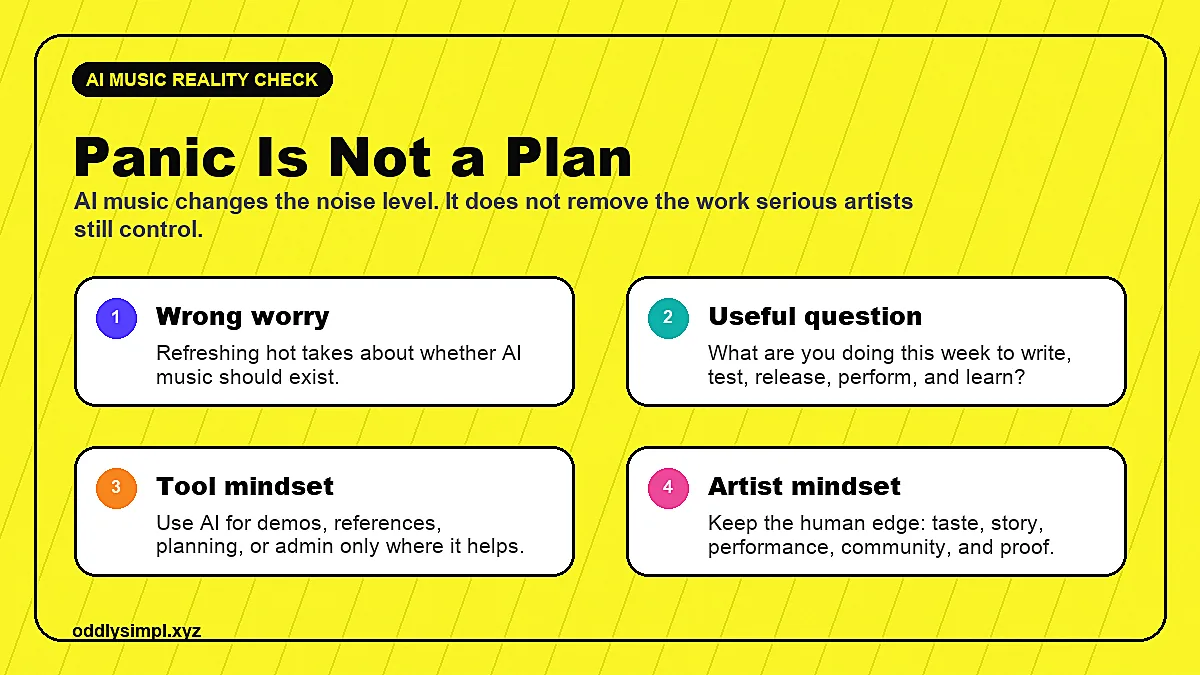
The AI music conversation is emotional for a valid reason.
Artists hear a Suno track that sounds almost real, read about training datasets, see a fake artist show up in a playlist, and immediately jump to the worst possible conclusion: the machines are coming, the platforms are cooked, and the point of making music is disappearing.
That reaction makes sense. It does not help you decide what to do next.
Artists now need a practical answer: can AI music be distributed, monetized, recommended, trusted, and turned into a real fanbase?
Quick answer: AI music can be useful inside an artist workflow, but fully generated songs are becoming harder to distribute, monetize, recommend, and defend. Use AI like a tool. Do not build your whole career plan around uploading synthetic catalog at scale.
If AI helps you sketch a demo, test an arrangement, write a caption, organize release tasks, or understand a genre reference faster, fine. That is similar to software developers using AI coding tools to move faster. But if the entire plan is "generate a lot of songs and upload them," that is not a music career. That is noise in a system already trying to filter noise out.
Can You Distribute AI Music?
Sometimes. AI music distribution depends on the distributor, the AI tool, the training-data policy behind that tool, the amount of human contribution, the rights involved, and the platform you are trying to reach.
Some services are drawing hard lines. CD Baby says it cannot accept AI-generated content, even if it is commercially licensed. TuneCore says GenAI-created music must come from models trained on fully licensed datasets. Bandcamp says music generated wholly or substantially by AI is not permitted.
Some distributors still allow AI-assisted workflows, but the rules vary by tool, distributor, and platform. Document what you made, what the tool made, which rights you have, and where the track is allowed to go.
Why AI music is spiking as an artist concern
The panic is not coming from nowhere. In June 2026, The Atlantic published an AI Watchdog investigation into large music datasets available to AI developers. The related dataset pages include LAION-DISCO-12M, listed at 12,320,916 YouTube tracks, Sleeping-DISCO-9M, listed at 9,713,413 YouTube tracks plus lyrics, the Free Music Archive dataset, listed at 106,574 tracks, and a Spotify Tracks dataset listed at 114,000 ripped tracks.
If you are an artist, seeing those numbers feels gross. It makes the training-data question personal: is my music being used to train AI?
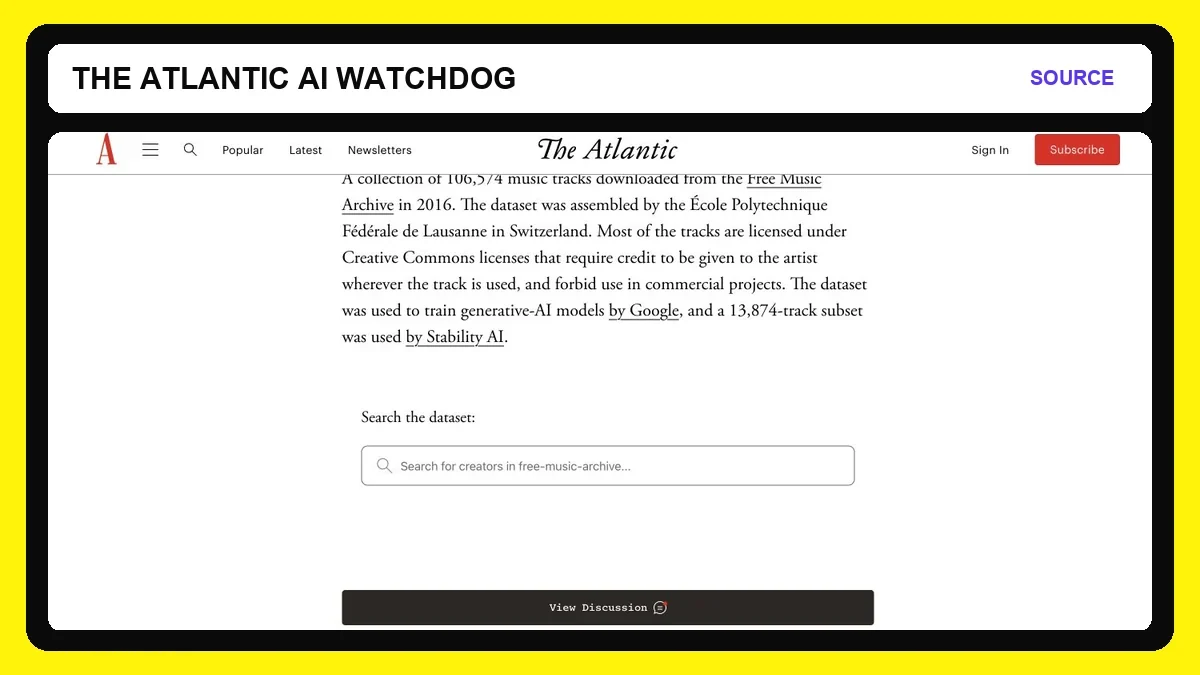
Maybe. But the practical answer is narrower than the emotional answer. Search tools can tell you whether your work appears in specific known datasets. They cannot prove every commercial model used your music, and they cannot prove your career is doomed if your songs appear somewhere.
Use the dataset conversation as a rights and awareness issue. Do not let it replace the more immediate work: better songs, clearer positioning, stronger content, live demand, owned fan capture, and cleaner release systems.
Distribution is not the same as monetization
This is where a lot of AI music advice online gets shallow.
A track can be accepted by a distributor and still face limits later. It can be tagged. It can be excluded from algorithmic recommendations. It can be blocked from Content ID. It can be unpaid on one platform and paid on another. It can stay searchable but not be pushed by the recommendation engine.
That is why the question "can I upload AI music to Spotify?" is only the first layer. The better questions are:
- Will my distributor accept this exact AI workflow?
- Does the AI tool disclose licensed or rights-cleared training data?
- Will the track be eligible for royalty attribution on every platform?
- Will it be eligible for social video monetization or Content ID?
- Will DSPs label it, suppress it from recommendations, or require extra disclosure?
- Can I prove which parts were human-created if there is a false positive?
That is the real AI music distribution problem. The file might go live and still be limited by royalties, recommendations, monetization, or disclosure rules.
What Tidal, Deezer, and distributors are doing
Platform policy is moving faster than most artist advice.
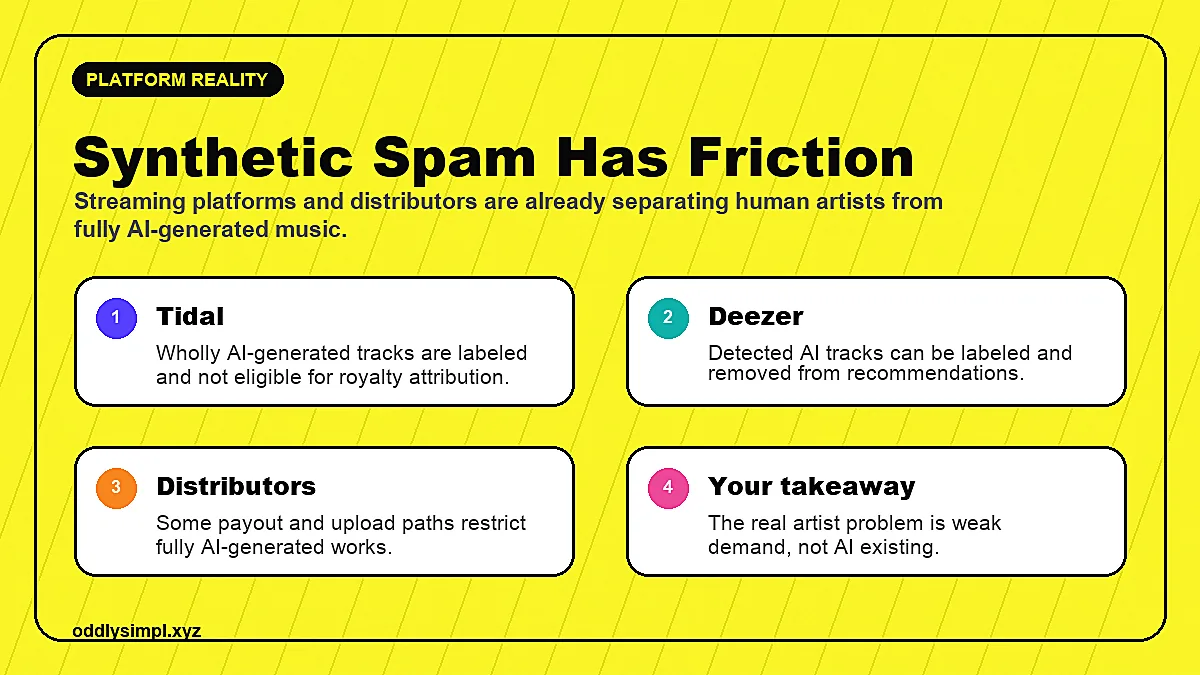
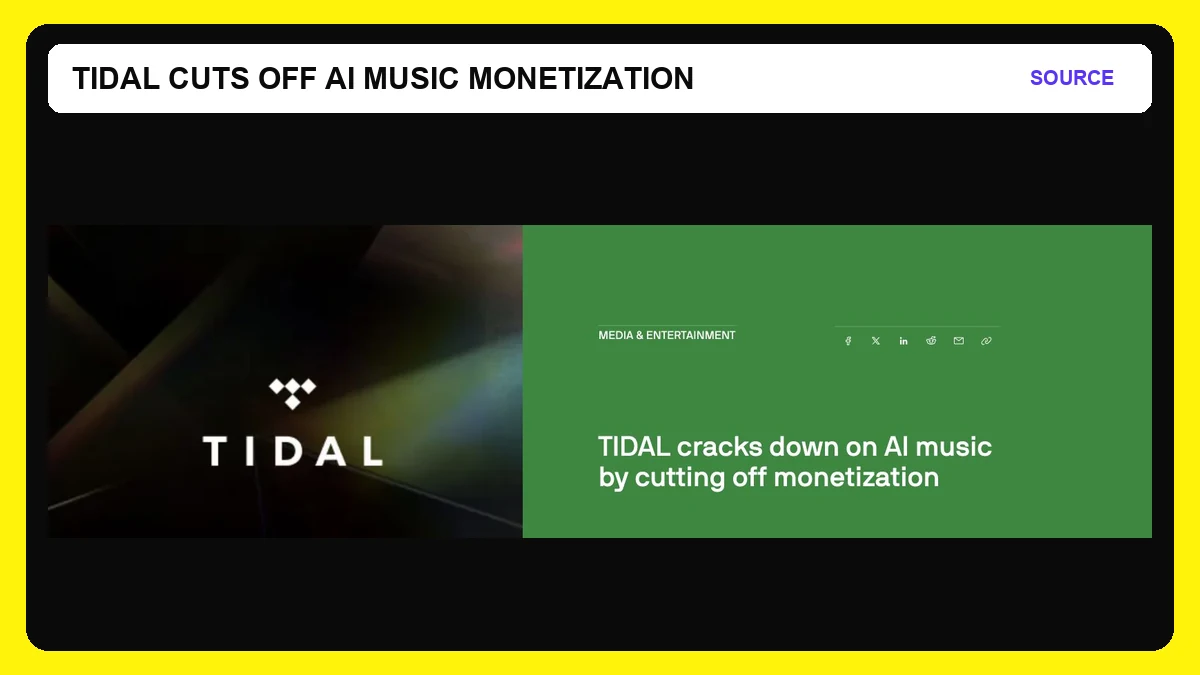
Tidal says it will label music it identifies as wholly AI-generated beginning July 15, 2026. The larger issue: Tidal says music identified as wholly AI-generated is not eligible for royalty attribution. Tidal also says it may block or remove AI-generated content connected to fraud, impersonation, deceptive activity, or unusual streaming behavior.
Deezer says it is receiving almost 75,000 fully AI-generated tracks per day, roughly 44% of daily uploads, while AI-generated music accounts for only 1-3% of streams. Deezer also says up to 85% of streams on fully AI-generated tracks were fraudulent in 2025 and excluded from royalty payments. On the creator side, Deezer says AI-tagged music can remain available, but may be excluded from algorithmic recommendations.
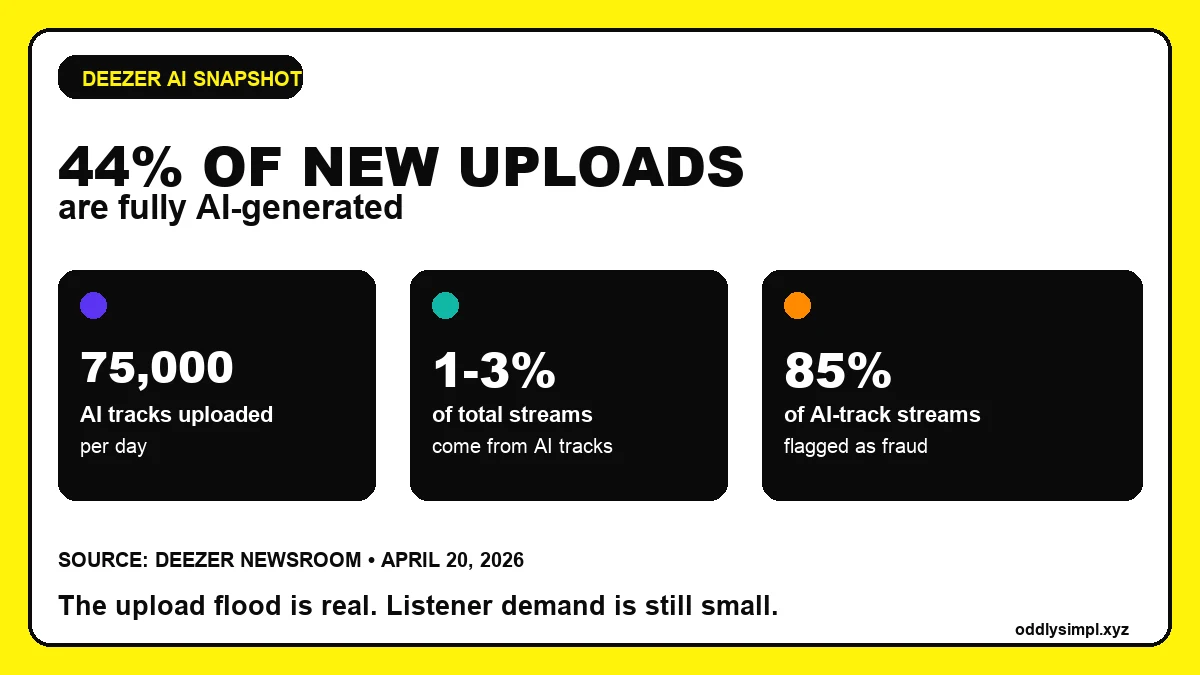
That should tell you where this is going. Platforms are not necessarily banning every AI-assisted workflow. They are trying to separate human artists, AI-assisted artists, and synthetic spam before the royalty pool and recommendation systems get flooded.
| Policy area | What artists should assume | Why it matters |
|---|---|---|
| Distribution | Not every distributor accepts AI-generated music. | Your release can be rejected before it reaches DSPs. |
| Royalties | Some platforms may treat wholly AI-generated tracks differently. | Live does not always mean monetized. |
| Recommendations | AI-tagged tracks may be excluded from algorithmic or editorial surfaces. | Searchable is not the same as discoverable. |
| Content ID | AI-assisted music can face stricter monetization limits. | You may lose YouTube, Meta, TikTok, or UGC revenue paths. |
| Proof | Document sessions, stems, tools, licenses, and human contribution. | False positives and disputes need evidence. |
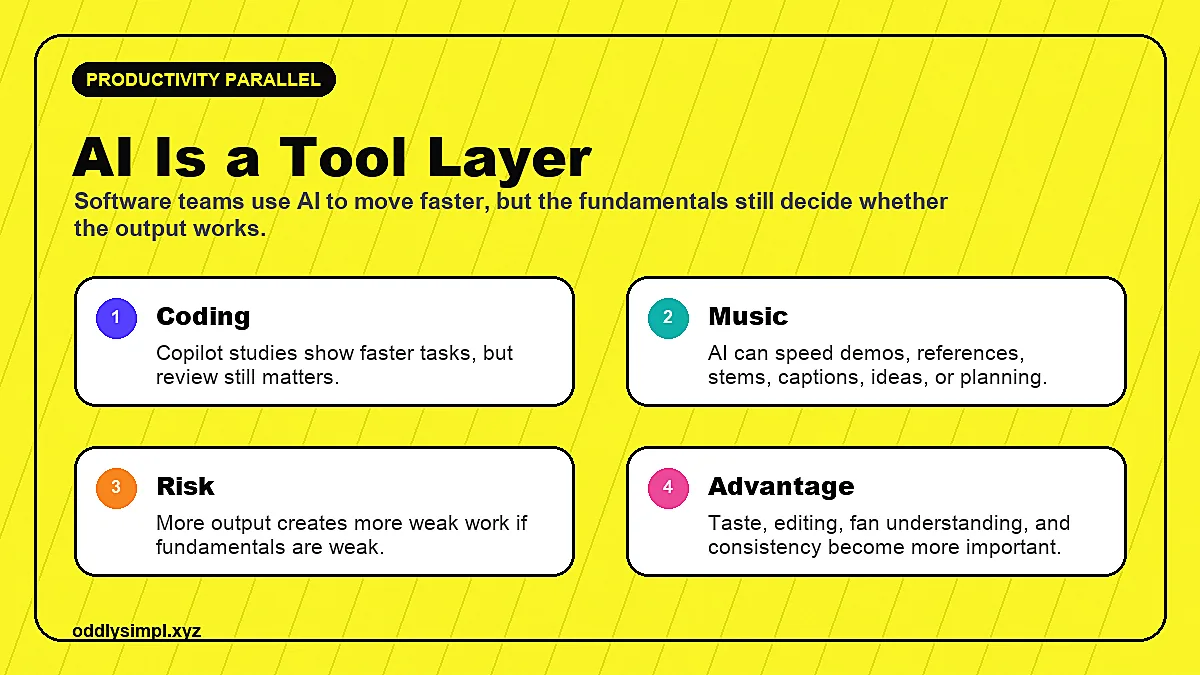
AI music tools are tools. So are AI coding tools.
The healthiest way to think about AI music is the same way serious software teams think about AI coding: it can speed up parts of the process, but it does not remove taste, review, judgment, or accountability.
A Microsoft/GitHub controlled experiment found developers using GitHub Copilot completed a JavaScript task 55.8% faster than the control group. That is a real productivity signal. But faster output does not automatically mean better software. Google's 2024 DORA report found AI adoption was associated with some individual improvements, including documentation quality and code review speed, while also warning that AI is not a panacea for delivery performance.
Music is similar. AI can help you move faster on demos, lyric variations, arrangement references, ad copy, content calendars, stem ideas, mood boards, or admin tasks. But faster output is not the same as better songs. It is not the same as taste. It is not the same as a scene, a live show, a story, a fanbase, or a release strategy.
What artists are saying in public
The public conversation is not one clean argument.
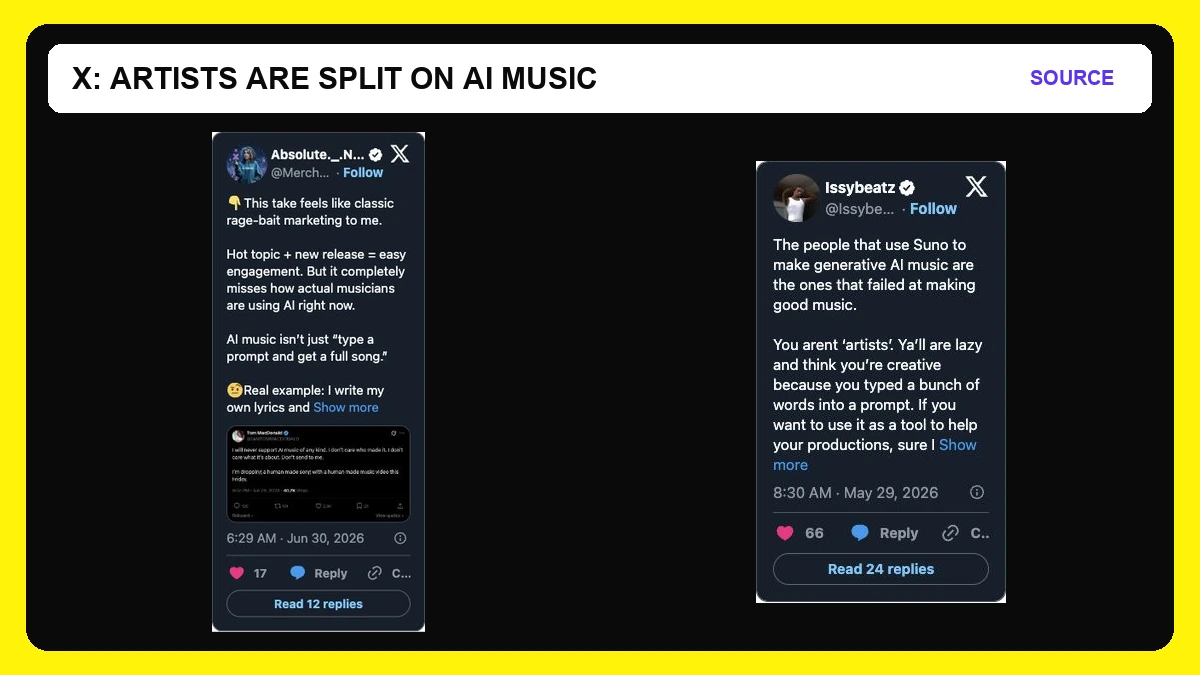
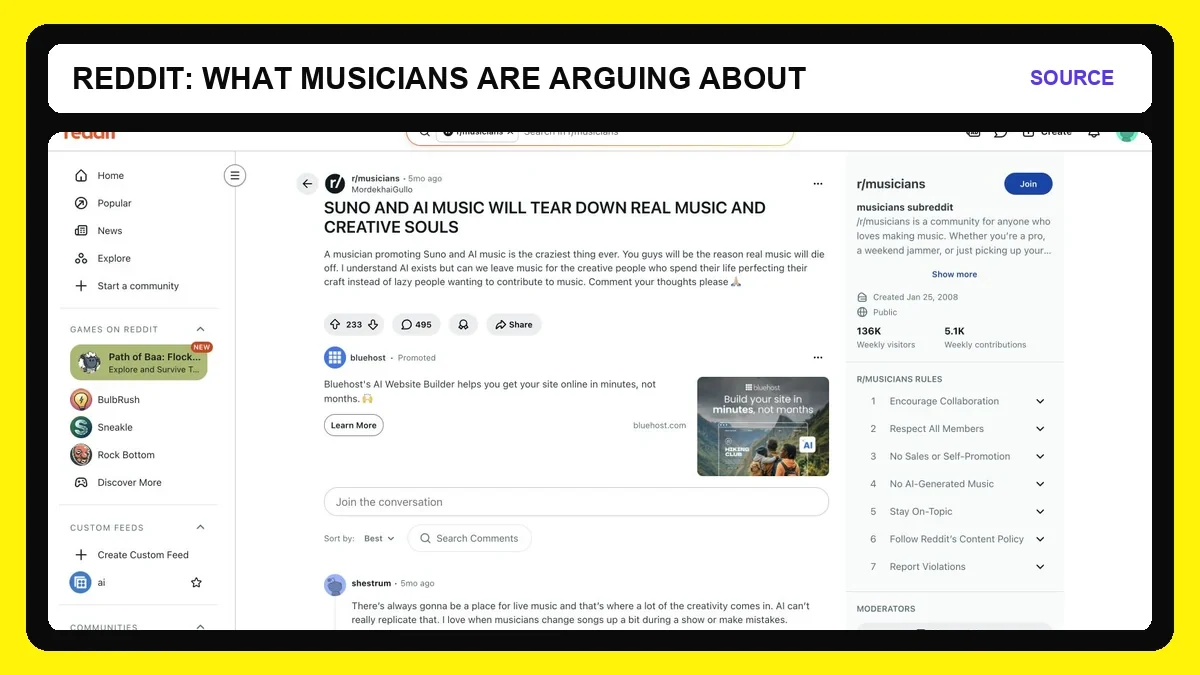
Some artists are using AI as a workflow layer: demos, arrangements, references, and editing support. Some producers are drawing a hard line between using tools and calling a prompt-only track musicianship. Others are focused less on the tool and more on platform flooding, impersonation, fake artist profiles, playlist spam, and whether recommendation systems will bury human work.
That split shows up across public X and Reddit conversations. For example, one indie vocalist described AI as a demo and arrangement tool, while producer Issybeatz pushed back on prompt-only Suno tracks being treated like musicianship. Mat Dryhurst's thread on AI training data is useful because it separates competition, compensation, impersonation, and general anti-AI sentiment instead of flattening everything into one panic.
What musicians should watch
AI will increase competition for social media real estate. It will increase competition for Spotify uploads. It will create more background music, more filler, more fake artists, and more low-effort catalog spam.
That does not mean serious artists should freeze.
Most independent artists are not losing because an AI model exists. They are losing because the release has no clear story, the content does not make strangers care, the live plan is weak, the audience capture is nonexistent, the data is ignored, or the artist is trying to promote one song at a time with no system.
Those are fixable problems.
Spend more time on the parts AI cannot fake well:
- Write better songs: AI raises the floor for disposable music, so the human ceiling matters more.
- Build a content format: fans need a reason to understand the song before they stream it.
- Play more shows: live proof still creates trust, community, and memory faster than feed noise.
- Own your audience: email, SMS, Discord, merch buyers, and local fans matter when algorithms shift.
- Measure listener quality: saves, follows, repeat listening, source quality, and fan actions beat empty reach.
- Document your process: session files, stems, licenses, and tool terms matter more in the AI era.
If that sounds less exciting than yelling about Suno, that is the point. The boring work compounds.
Practical checklist before using AI music tools
If you use AI anywhere in your process, make the workflow defensible.
- Read the AI tool's terms, commercial-use language, and training-data disclosures.
- Check your distributor's AI policy before you build the release around that tool.
- Do not use cloned voices, soundalikes, or artist-name prompts unless you have explicit rights.
- Keep DAW sessions, stems, notes, lyric drafts, vocal takes, and export history.
- Save screenshots or PDFs of tool licenses and terms on the date you used them.
- Disclose AI usage where your distributor or platform requires it.
- Do not assume the track is eligible for Content ID, social video monetization, or every royalty path.
- Use AI for acceleration, not as a substitute for taste, performance, or fan understanding.
The simpl. position
Most independent artists should spend less time panicking about AI music.
If you are at the stage where you do not have a repeatable content format, a live plan, a clean release system, a real fan capture path, or any idea which listeners save and come back, then AI music is probably not your biggest threat. It is the latest excuse to avoid the work.
Use the tools if they help. Ignore them if they do not. But do not confuse tool adoption with strategy.
The artists who win from here will not be the ones who complain the loudest about AI. They will be the ones who write better songs, create better context, build better fan relationships, and measure the difference between attention and demand.
If you need the non-AI part built properly, start with our music marketing strategy guide, the music release strategy guide, or Spotify ads for artists.
Keep building the strategy
-
Music marketing strategies
Build the full system around content, ads, release timing, and fan retention.
-
Music analytics
Use listener data to make better release, content, and ad decisions.
-
Spotify ads for artists
Turn the right listeners into repeat fans with a campaign built around your sound.
About the author

Anthony Pacheco
Anthony Pacheco is the founder of simpl., a former Sony Music analyst, and a Billboard-charting musician who has helped run 750+ artist marketing campaigns. He writes about real listener behavior, release systems, Spotify ads, and how artists can grow without fake playlist traffic.