Spotify · Updated July 9, 2026
How to Get on Spotify Algorithmic Playlists
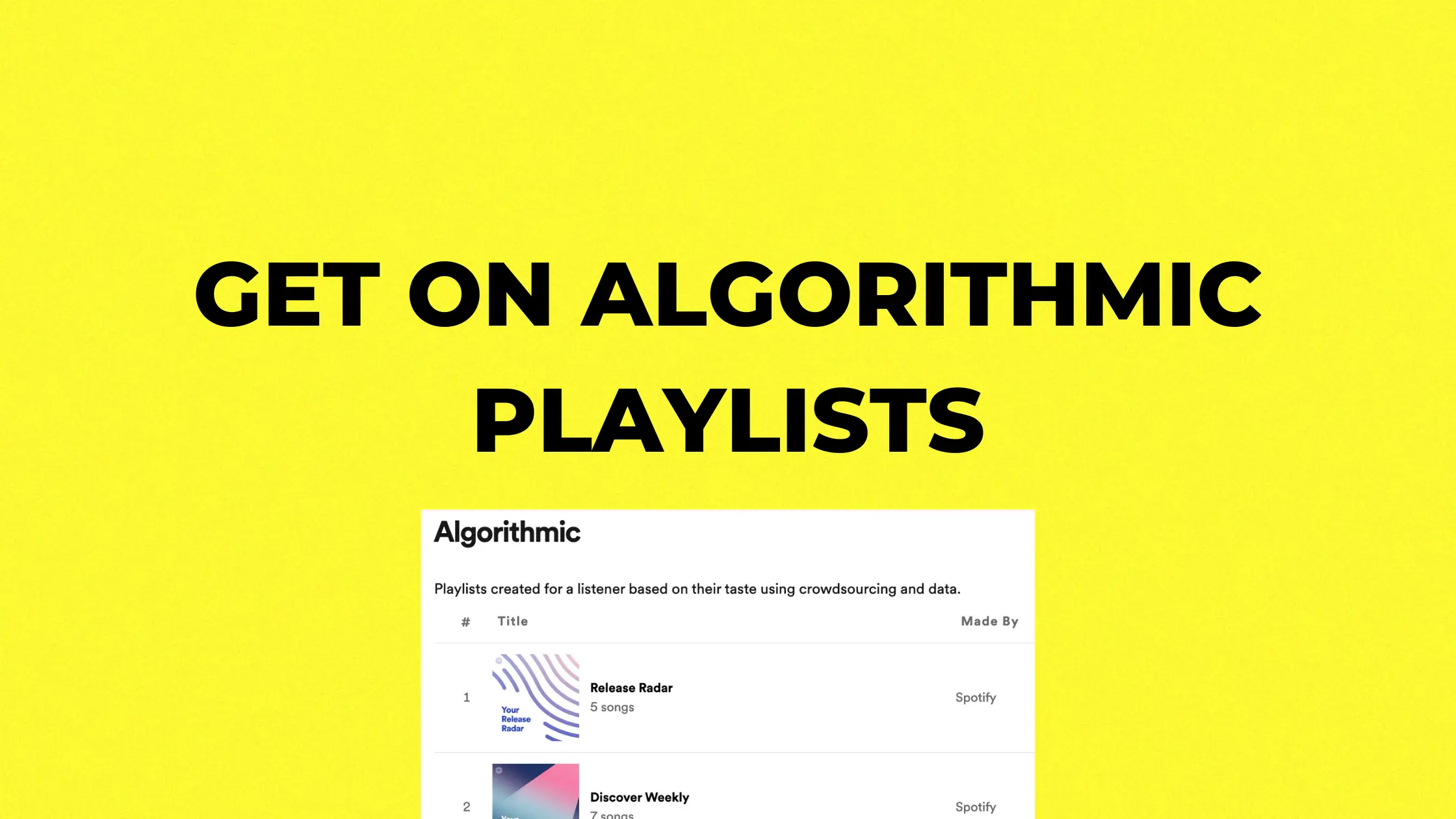
You cannot pitch Spotify algorithmic playlists directly.
You earn them.
That is the part a lot of artists miss. Discover Weekly, Release Radar, Radio, Daily Mix, and other personalized Spotify surfaces are not unlocked by one trick. They are triggered when Spotify sees enough real listener behavior to believe your song belongs in front of more people like those listeners.
The goal is not to hack the algorithm. The goal is to feed it clean signals.
Those signals come from the right people hearing the right song and acting like they want it again: saving, following, replaying, adding it to playlists, finishing the track, and coming back after the first click.
Quick Answer: How to Get on Spotify Algorithmic Playlists
You get on Spotify algorithmic playlists by creating listener behavior Spotify can trust: followers before release, a clean Spotify for Artists pitch, saves, repeat listening, personal playlist adds, low-skip sessions, and traffic from people who fit the song.
The practical path is simple: build context before release day, send the right listeners to the song, watch source quality, and keep pushing the audience segments that save, follow, and come back.
If you are looking for curator pitching or playlist submission, use the Spotify playlist submission guide. Algorithmic playlists work differently. You cannot submit directly to Discover Weekly, Radio, Daily Mix, or autoplay.
The Main Spotify Algorithmic Playlists
Spotify describes algorithmic playlists as personalized for listeners. The big ones artists usually care about are:
- Discover Weekly: a personalized Monday playlist that introduces listeners to music Spotify thinks they will like.
- Release Radar: a Friday playlist for new releases from artists a listener follows, artists they listen to, and other artists Spotify thinks they may like.
- Radio: personalized listening based on an artist, song, album, or playlist.
- Daily Mix: recurring mixes based on a listener's taste patterns.
- Autoplay and recommendations: the next-song moments that happen after a playlist, album, or track ends.
In plain English, "Spotify algorithmic playlists" means personalized Spotify surfaces that are generated for each listener instead of manually built the same way for everyone. Your song does not get one universal slot. It gets tested with listeners Spotify thinks might respond.
Algorithmic Playlists vs Editorial Playlists
Editorial playlists are selected by Spotify editors. Algorithmic playlists are personalized by Spotify's recommendation systems. Some Spotify playlists are also personalized editorial playlists, which means two listeners can open a playlist with the same name and see different track orders or different songs.
For artists, the practical difference is simple:
- Editorial: you can pitch one unreleased song through Spotify for Artists before release day.
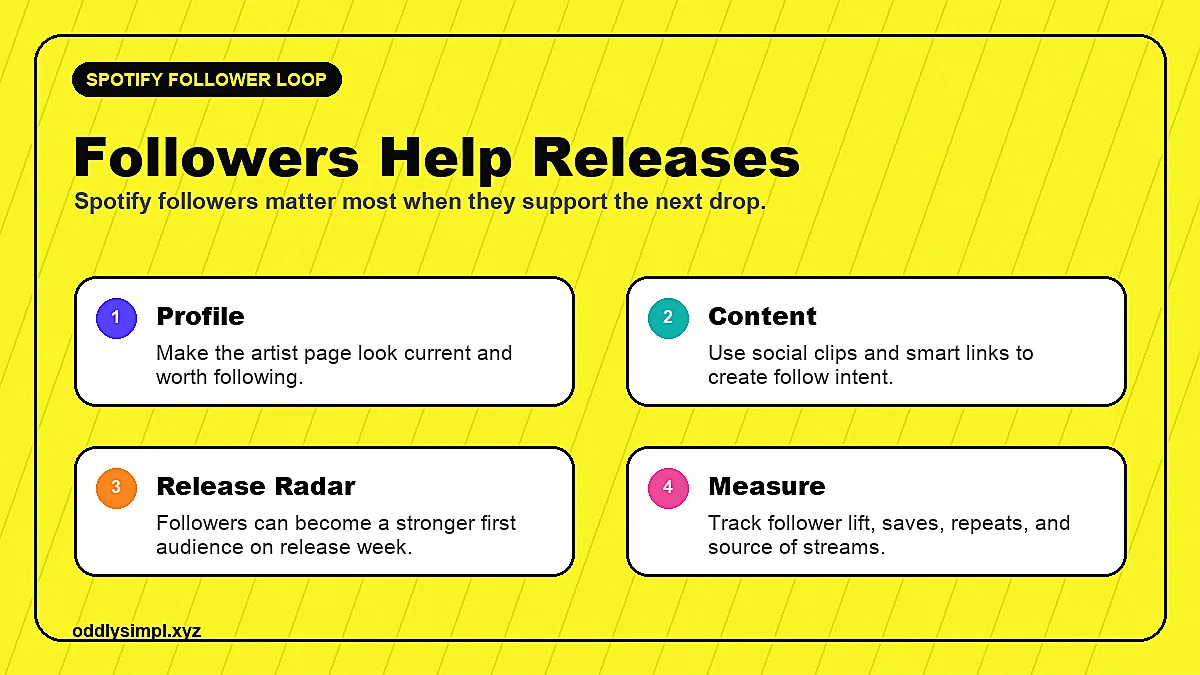
- Release Radar: your followers can receive your new release, and pitching lets you choose which song from a release goes to followers.
- Discover Weekly, Radio, autoplay, and mixes: you cannot submit directly; the opportunity comes from listener behavior and audience fit.
That is why chasing editorial alone is too narrow. A strong release plan should create the kind of listener behavior that can help both editorial consideration and algorithmic recommendations.
Release Radar vs Discover Weekly
Release Radar is mainly a new-release surface. Spotify says it updates every Friday and includes music from artists a listener follows, artists they listen to, and other artists Spotify thinks they will like. If you pitch a song, Spotify says that song can be included in your followers' Release Radar.
Discover Weekly is more of a discovery surface. It updates on Mondays and is built around taste patterns. You do not get on Discover Weekly by filling out a form. You earn the possibility when Spotify sees enough real engagement to test the song with more listeners.
Use this mental model:
- Release Radar: best influenced before release by followers, delivery timing, and a Spotify for Artists pitch.
- Discover Weekly: best influenced after release by saves, repeat listening, playlist adds, clean traffic, and audience similarity.
Release Radar is the most directly controllable starting point because your Spotify followers get songs from your new release in their Release Radar. If you pitch a song through Spotify for Artists, Spotify says that pitched song is included in your followers' Release Radar.
The Signals That Help Spotify Recommend Your Music
Spotify does not publish a simple checklist that says "hit this number and you get Discover Weekly." Be skeptical of anyone promising that.
But the pattern is clear: algorithmic growth follows listener behavior.
- Saves: listeners add the song to their library because they want it again.
- Playlist adds: listeners put the track into their own playlists.
- Repeat streams: people come back instead of playing once and disappearing.
- Completion rate: listeners stay through the song instead of skipping early.
- Follower growth: more followers means more future Release Radar reach.
- Profile and catalog activity: listeners explore more than one track.
- Clean source of streams: traffic comes from believable listeners, not suspicious playlists or artificial streaming.
- Audience consistency: the same kinds of listeners keep responding, giving Spotify a clearer taste cluster.
This is why fake streams and low-quality playlist traffic are dangerous. They do not just create vanity numbers. They can teach Spotify the wrong thing about your audience.
What Reddit Gets Right About Spotify Algorithmic Playlists
Reddit threads about Spotify algorithmic playlists are often skeptical because artists see vague advice everywhere: "get more saves," "trigger the algorithm," "buy promotion," "hit Discover Weekly." The skepticism is useful. Nobody outside Spotify can promise a specific Discover Weekly outcome.
What Reddit-style advice usually gets right is this: bad traffic can make the data messy. If your first listeners are random, passive, or fake, Spotify may struggle to understand who the song is for. If your first listeners are real fans of adjacent artists, scenes, moods, and communities, the data is cleaner.
So do not ask, "How do I hack the algorithm?" Ask, "How do I consistently find the listeners most likely to save, repeat, follow, and add this song to their life?" That is the less flashy answer, but it is the one that compounds.
Can You Promote Spotify Algorithmic Playlists?
You cannot pay to be placed directly on Discover Weekly, Release Radar, Radio, or Daily Mix. Be careful with any Spotify algorithmic playlist promotion service that makes it sound like they can unlock those surfaces for a fee.
What you can promote is the listener behavior around the song. You can run ads, content, email, creator outreach, smart links, and release campaigns that send the right listeners to the track. If those listeners behave like fans, the algorithm has better evidence to work with.
What to Do Before Release Day
If you want algorithmic playlists, start before the song drops.
- Build Spotify followers: every real follower gives your next release a better starting point in Release Radar.
- Pitch the song through Spotify for Artists: do this at least seven days before release, and be specific about genre, mood, instruments, audience, and story.
- Create content that gives the song context: the algorithm cannot care for people. Your content has to create the first reason to listen.
- Set up a smart link: track where clicks come from and which platforms fans choose.
- Warm up the right audience: fans of similar artists, people who already engaged with your content, email subscribers, and past listeners.
This is where a full music release strategy matters. Release day should not be the first time anyone hears why the song exists.
What to Do During Release Week
Release week is about concentrated, clean signals.
- send warm fans directly to the song
- ask people to save the track if they like it
- tell fans to follow you on Spotify for the next release
- post multiple content angles, not the same cover-art graphic repeatedly
- run ads only to audiences likely to care about the music
- watch source of streams, saves, followers, and repeat listeners
Do not buy a guaranteed-stream package because you are anxious. Spotify warns artists to be skeptical of services that claim they can get a song streamed, playlisted, or prioritized in algorithmic recommendations. That is not a growth plan. That is a risk.
How Ads Can Help Algorithmic Playlists
Ads can help when they send the right people to the right song.
The point is not cheap clicks. The point is qualified listeners. A $0.10 click that skips after twelve seconds is not better than a more expensive click from someone who saves the song, follows you, and replays it the next day.
A good ad campaign tests:
- which audience responds to the song
- which clip or lyric creates the strongest intent
- which country or city produces real listener behavior
- whether the post-campaign baseline rises after spend slows down
That is why Spotify ads and Meta ads should be judged with music analytics, not just ad-platform click costs.
How to Measure Algorithmic Progress
Open Spotify for Artists and look at Source of Streams. Spotify says this report shows where listeners play your tracks and lets you segment by time period, country, streams, listeners, and streams per listener.
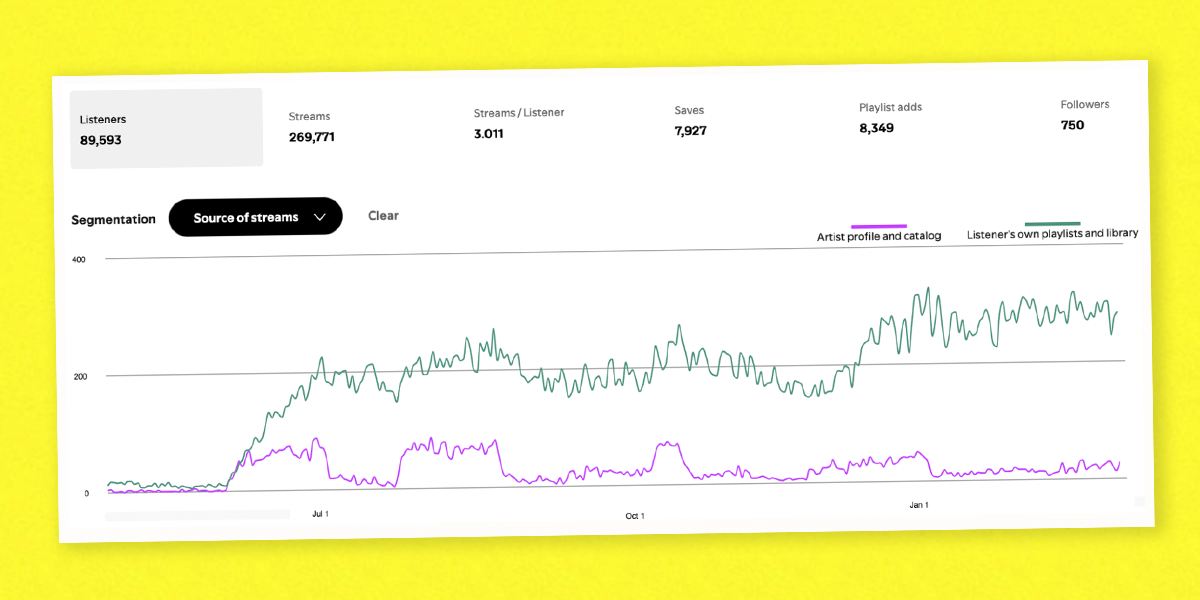
Watch for:
- Release Radar growth after release week
- Discover Weekly spikes on Mondays
- Radio and autoplay movement
- listener library and personal playlist activity
- streams per listener increasing instead of flattening
- new followers after each release
The most important question is not "did the graph spike?" It is "did the spike leave anything behind?"
How Fans Also Like Fits In
Your Spotify Fans Also Like section is not the same thing as Discover Weekly, but it can reveal whether Spotify is understanding your audience correctly.
If you are being grouped next to artists your actual fans also love, that is a good sign. If you are being grouped next to random unrelated artists, your listener data may be too thin or too noisy.
To improve that, drive traffic from the listeners you want. Similar-artist targeting, creator partnerships, playlist fit, and content positioning all help Spotify learn where you belong.
The Real Algorithmic Playlist Strategy
The real strategy is boring in the best way:
- Release consistently.
- Build followers before each release.
- Pitch every release properly.
- Use content to create context.
- Send clean traffic from real potential fans.
- Measure saves, follows, repeats, and source quality.
- Use what you learn on the next release.
Algorithmic playlists are not magic. They are feedback loops.
Spotify Algorithmic Playlists FAQ
What are Spotify algorithmic playlists?
Spotify algorithmic playlists are personalized recommendation surfaces such as Discover Weekly, Release Radar, Radio, Daily Mix, autoplay, and other mixes generated around listener behavior.
How do you get on Spotify algorithmic playlists?
You get on Spotify algorithmic playlists by creating real listener behavior around the song: saves, follows, repeat plays, personal playlist adds, low-skip listening, clean traffic, and audience consistency.
Can you submit directly to Spotify algorithmic playlists?
No. Artists can pitch unreleased music through Spotify for Artists for editorial consideration and follower Release Radar, but they cannot submit directly to Discover Weekly, Radio, Daily Mix, or autoplay.
Do Spotify ads help algorithmic playlists?
Spotify ads and Meta ads can help when they send likely fans to the song and those listeners save, follow, replay, and add the track to playlists. Cheap clicks from the wrong audience can make the data noisier.
If you want help building that loop, work with simpl. We help independent artists use content, ads, analytics, and release planning to drive the kind of listener behavior Spotify can trust.
Keep building the strategy
-
Music release strategy
Build the release timing, content, and follower base that feed algorithmic discovery.
-
Spotify Fans Also Like
Check whether Spotify is grouping you with the right artists and listeners.
-
Spotify ads for artists
Drive clean traffic from listeners who are likely to save, follow, and replay.
About the author

Anthony Pacheco
Anthony Pacheco is the founder of simpl., a former Sony Music analyst, and a Billboard-charting musician who has helped run 750+ artist marketing campaigns. He writes about real listener behavior, release systems, Spotify ads, and how artists can grow without fake playlist traffic.