Marketing Strategy · Updated July 3, 2026
Music Social Media Marketing for Musicians in 2026
Music social media marketing can break a song, but it can also waste an artist's entire release cycle.
Views feel good. Likes feel good. A clip doing numbers can make it look like the campaign is working. But if the attention never turns into saves, follows, repeat streams, email signups, ticket interest, or people who remember your name, the spike is noise with better lighting.
The point of social media promotion in 2026 is not to be everywhere. The point is to create intent: make the right listener care enough to take the next step.
Music Social Media Marketing Starts With the Song Angle
Before choosing platforms, choose the angle. Most artists skip this and post the same cover art, snippet, and "out now" caption until everyone is tired.
Ask:
- Who is this song for?
- What line makes the listener feel called out?
- What story makes the song easier to care about?
- What similar artists help people understand the world of the song?
- What visual or performance moment makes the track memorable?
If you cannot answer those questions, posting more will spread the same unclear message across more platforms.
Use Each Social Platform for a Different Job
TikTok
TikTok is best for testing hooks, stories, lyrics, identity angles, and fast listener reactions. Use it to find the idea that strangers respond to. TikTok for Artists also gives artists and teams more music-specific insight into fan engagement and content performance.
Start with the TikTok content template for musicians if you need repeatable post formats.
Instagram Reels
Instagram is useful for turning attention into social proof and community. Reels can reach new people, Stories can deepen the relationship, and the profile can make the artist world feel cohesive. Use Reels for discovery, Stories for participation, and carousels or pinned posts for context.
YouTube Shorts
Shorts can introduce the song, but YouTube also gives you a longer-term home for music videos, live clips, lyric videos, visualizers, and behind-the-scenes content. If the song has a video world, do not treat Shorts as a separate platform. Use it as the entry point into the larger YouTube channel, then use the music video promotion guide to connect the official upload, short clips, ads, and retargeting.
Email and SMS
This is not technically social media, but it belongs in the system. Social platforms rent you attention. Email and SMS help you keep the warmest fans when the algorithm stops showing your posts.
Social Media Marketing for Musicians Needs a Campaign Path
Good social media marketing for musicians is not a pile of posts. It is a path from first impression to fan action. A stranger sees the clip, understands the song world, clicks into the profile, finds the track, and has a reason to save or follow.
This matters for solo artists, music artists with managers, and bands. Social media marketing for bands often fails because each member posts random assets with no shared angle. Pick the line, story, visual world, and listener identity first. Then every platform can repeat the same idea in a format that fits.
A clean campaign path has four parts:
- Discovery content: clips built to stop the right stranger.
- Context content: posts that explain the story, scene, sound, or reference points.
- Action content: posts that ask for one useful move, like save, follow, comment, or join the list.
- Retention content: Stories, email, SMS, Discord, or YouTube that keep fans warm after the first post.
For a band, assign one person to own the release angle and let each member adapt it to their voice. That keeps the campaign coherent without forcing everyone to post the same caption.
Build a Weekly Social Media Music Promotion System
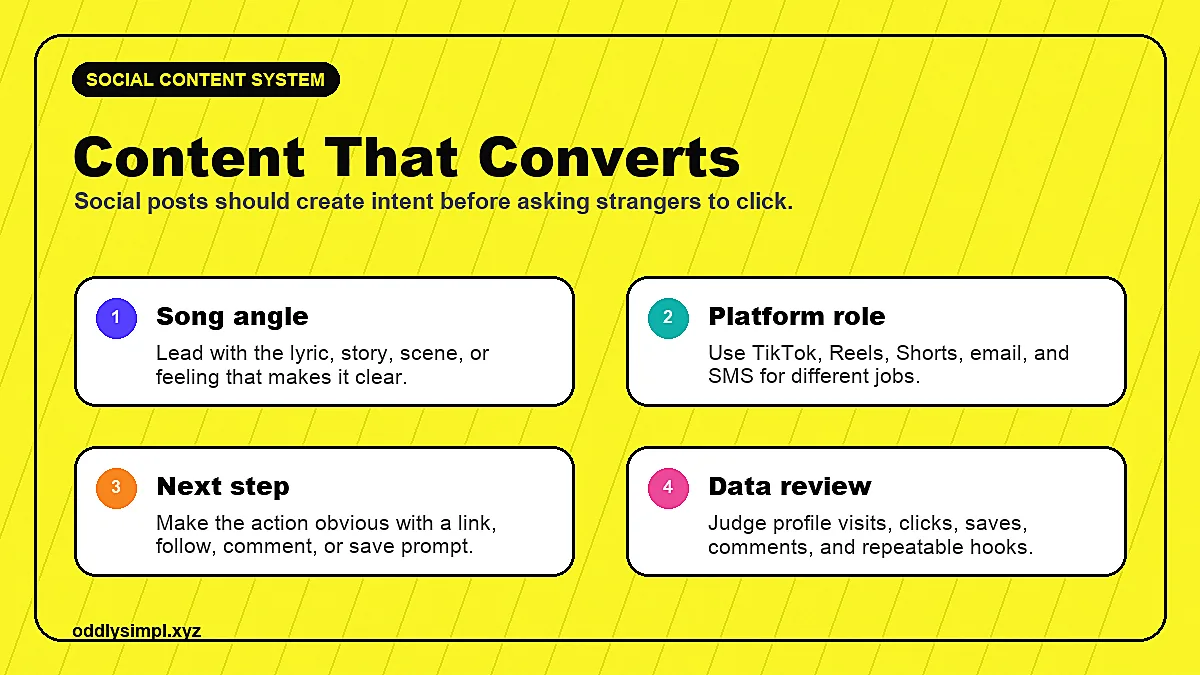
For one song, create 10-15 pieces of content before you decide the song "doesn't work."
- 3 lyric hooks: the line, the feeling, and who it is for.
- 3 story posts: why the song exists, what changed, and what people misunderstand about it.
- 3 performance clips: raw vocal, live take, acoustic version, rehearsal, or studio moment.
- 3 context posts: similar artists, visual world, playlist fit, mood, city, scene, or fan identity.
- 2 fan-action posts: ask for saves, follows, comments, duets, stitches, shares, or email signups with a specific reason.
Then study which angle creates real behavior. The winner becomes next week's content, not a one-time post you immediately abandon.
Make the Next Step Obvious
Every post should have one job. Do not ask people to stream, follow, comment, share, buy merch, join Discord, and watch the video all at once.
Use one clear next step:
- save the song if the lyric hits
- follow on Spotify so you hear the next release
- comment the line you needed today
- watch the full video
- join the email list for the demo or acoustic version
- send this to someone who needs it
Use Smart Links and Analytics
If social media is sending people to your music, measure what happens after the click. A viral post that sends low-intent traffic can confuse your data. A smaller post that sends the right people can make the next campaign smarter.
Watch:
- profile visits
- link clicks
- Spotify saves and follows
- repeat listening
- email or SMS signups
- best-performing cities and countries
- which content angle keeps working across platforms
Pair this with the music analytics guide and the smart links for music guide so the campaign does not rely on vibes alone.
When to Use Paid Ads
Ads work better after organic content gives you a signal. If three clips all perform badly, spending money makes the problem louder. If one angle creates comments, saves, profile visits, or strong watch time, that is the version worth testing with budget.
Paid social can help you:
- test similar-artist audiences
- retarget people who watched or clicked
- drive qualified listeners to Spotify
- support release week without relying on one viral post
- turn the best creative into a repeatable campaign
Social media should not reset every release. The goal is to learn who cares, what made them care, and how to reach more people like them next time.
Music Social Media Marketing FAQ
How do musicians promote music on social media?
Musicians promote music on social media by turning each song into repeatable content angles: lyric hooks, story posts, performance clips, process clips, fan prompts, and clear next steps that drive saves, follows, streams, email signups, or ticket interest.
Which social media platform is best for promoting music?
TikTok is useful for testing hooks and discovery, Instagram is useful for social proof and community, YouTube Shorts can feed the larger YouTube channel, and email or SMS keeps the warmest fans reachable after the post dies.
How often should musicians post on social media?
Most independent artists should test at least 3-5 short-form posts per week around a release. The better question is whether each post has a different angle and whether any post creates listener action.
Should musicians run ads to promote social media posts?
Run ads after organic posts show a signal worth testing. If a clip creates comments, profile visits, saves, or strong watch time, paid social can help test audiences and drive cleaner Spotify traffic.
For the larger system, read the music marketing strategy guide and the guide to using TikTok to grow a real music fanbase. If you want help turning content into listener data and paid campaigns, work with simpl.
Keep building the strategy
-
TikTok for musicians
Turn short-form attention into saves, follows, and real fan actions.
-
Music analytics
Measure which social content creates listener quality, not just views.
-
Music marketing strategies
Fit social content into release planning, ads, and long-term fan growth.
About the author

Anthony Pacheco
Anthony Pacheco is the founder of simpl., a former Sony Music analyst, and a Billboard-charting musician who has helped run 750+ artist marketing campaigns. He writes about real listener behavior, release systems, Spotify ads, and how artists can grow without fake playlist traffic.