Marketing Strategy · Updated July 3, 2026
Record Label Marketing Plan for Indie Labels

An indie label does not need to market every artist like a major-label priority project. It needs a repeatable system that keeps each artist specific while letting the label learn across the whole roster.
Quick Answer: What Is Record Label Marketing?
Record label marketing is the system a label uses to turn songs, artists, and releases into audience growth. For an indie label, that means roster positioning, release planning, content, playlist pitching, ads, email, press, live strategy, analytics, and cross-artist fan development.
The best indie-label marketing plan is not a pile of random promo tactics. It is a repeatable release system where every artist campaign teaches the label something useful: which scenes respond, which cities matter, which creative converts, which audiences overlap, and which channels deserve more budget next time.
How Indie Label Marketing Works
Indie labels win by being sharper, faster, and more specific than bigger teams. A small label cannot copy a major-label rollout and hope the budget gap disappears. It needs a clear roster lane, faster feedback, and campaigns that teach the label something across more than one artist.
The useful advantages of being indie:
- Faster decision-making and release timelines
- More authentic artist relationships and creative freedom
- The ability to build tight-knit fan communities around niche genres
- Direct-to-fan marketing without corporate gatekeeping
Building a Roster with a Cohesive Identity
Strong indie labels are not loose collections of artists. They are brands with a distinct identity. Think about what your label stands for, the genres you specialize in, and the kind of fans you're serving. Sign artists who reinforce that identity and can cross-promote each other's work.
Record Label Marketing Plan Template
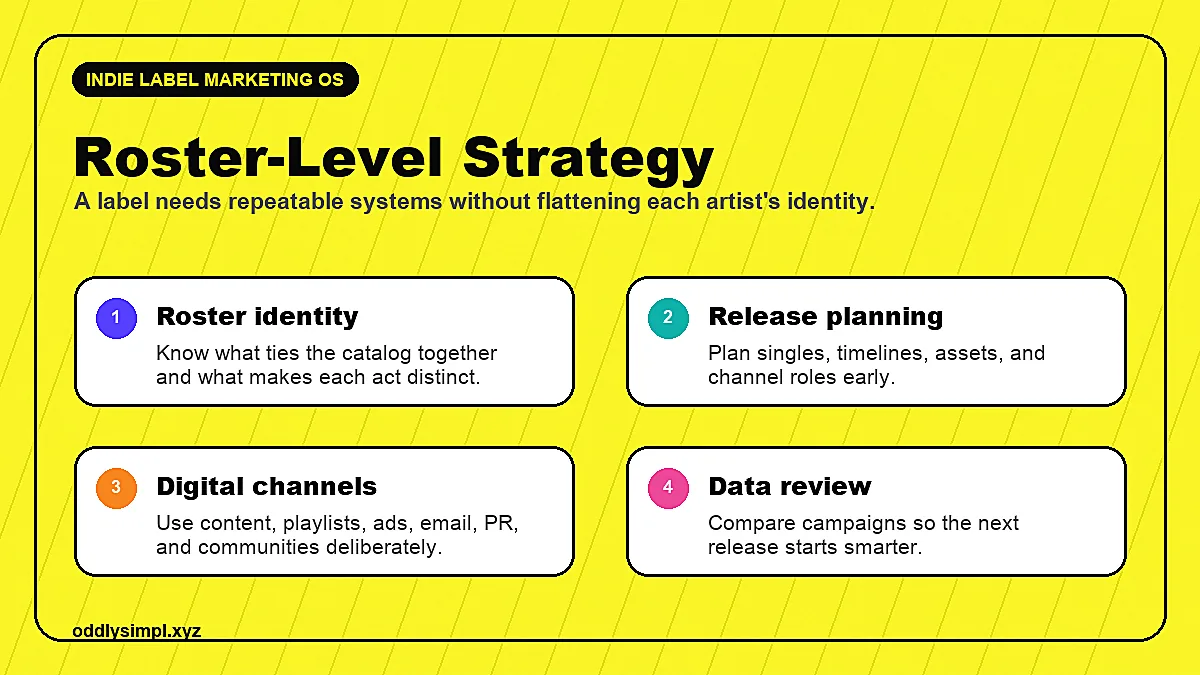
Use this as the operating plan before each release:
| Label marketing layer | What to define | Useful metric |
|---|---|---|
| Roster lane | Genre, scene, similar artists, visual identity, and audience overlap | Follower overlap, city overlap, similar-artist fit |
| Release calendar | Singles, EPs, albums, videos, tour dates, and content deadlines | On-time assets and release cadence |
| Content system | Short-form angles, artist story, performance clips, BTS, and creator collabs | Watch time, saves, shares, comments, link clicks |
| Fan capture | Email, SMS, Discord, merch buyers, show RSVPs, and retargeting pools | Signups, replies, buyers, repeat engagement |
| Paid media | Test audiences, creative hooks, cities, and retargeting sequences | Saves, follows, repeat listeners, cost per useful action |
| Analytics | Spotify, Apple, YouTube, smart-link, ad, and sales data | Source quality, city demand, retention, conversion |
If the plan does not say who the release is for, what content will prove it, where the fan goes next, and what data decides the next move, it is not a marketing plan yet.
Digital Channels for Record Label Marketing
- Playlist strategy: pitch releases to trusted curators and track which relationships create saves, follows, and repeat listeners.
- Social media: build a label presence separate from individual artists so fans can discover the wider roster.
- Email list: segment by genre, artist, city, or buyer behavior so fans get music relevant to them.
- Paid ads: run cross-artist retargeting when fans of one artist are likely to enjoy another artist on the roster.
Record label marketing works better when the label treats each channel like a job, not a dumping ground. A label TikTok account can introduce the roster world. Artist accounts can carry the personal story. Email can announce drops, shows, merch, and behind-the-scenes moments to fans who already raised their hand. Ads can test whether fans of one artist respond to another artist in the same scene.
For a small music label, the best digital marketing plan is a shared operating system with artist-specific execution. The label owns the calendar, benchmarks, dashboards, and campaign review. The artist owns the voice, story, and content that makes the release feel human.
Social media marketing for record labels should also protect the roster from sameness. The label account can set the world and connect releases. Each artist account should still sound like the artist, not like a shared content intern is posting from four profiles.
The label should review each campaign as a roster asset. Save the winning hooks, cities, audiences, curator notes, and creative angles so the next artist does not start from zero.
Record Label Digital Marketing Channels
Small labels usually do not lose because they lack channels. They lose because every channel is disconnected. Use each channel for a specific job:
- TikTok, Reels, and Shorts: test story angles, hooks, and audience language before spending real money.
- Spotify and DSP profiles: keep profiles current, pitch releases properly, and watch whether listeners save, follow, and return.
- Smart links: give fans platform choice, track sources, and build retargeting audiences from release traffic.
- Email and SMS: own the relationship with fans who buy, show up, reply, or repeatedly engage.
- Ads: test the audience and creative instead of blindly buying streams or hoping a playlist does the job.
- Press and local partners: build credibility around the artist story, show dates, and scene context.
Playlist Promotion Without Poisoning the Roster
Playlist pitching can be useful, but labels need to be especially careful. Bad traffic can hurt more than one release. It can make an artist's audience data harder to read across the whole roster.
A safer label approach is to combine selective pitching with content, smart links, ads, and analytics. If a playlist creates streams but no saves, follows, repeat listeners, or useful city data, treat it as a weak signal. For deeper risk checks, read the Spotify promotion services guide.
Data-Driven Release Planning
Use music analytics across your entire roster to identify trends, spot which cities have strong listener clusters, and plan tours and promotional efforts accordingly. A data-driven approach helps small budgets go much further.
A good label dashboard does not need to be complicated. Track each release by saves, follows, source of streams, city demand, smart-link clicks, content saves/shares, merch or ticket actions, and whether the next release starts from a smarter place.
Pair this with the music release strategy guide, the independent artist marketing strategy guide, and smart links for music so the label has one repeatable operating system instead of disconnected campaigns.
Record Label Marketing FAQ
What should be in a record label marketing plan?
A record label marketing plan should define roster lanes, release calendar, content system, fan capture, playlist strategy, paid media tests, press angles, analytics, and cross-artist growth opportunities.
How do indie labels market artists?
Indie labels market artists by building clear positioning, planning releases, testing content, pitching playlists and press, running controlled ad campaigns, growing owned audiences, and using roster data to improve each campaign.
What digital marketing channels should record labels use?
Record labels should use TikTok, Reels, Shorts, Spotify and DSP profiles, smart links, email, SMS, Discord, ads, press, and live/show data. Each channel needs a job instead of becoming another place to post randomly.
How should indie labels measure marketing?
Indie labels should measure saves, follows, repeat listening, source of streams, smart-link clicks, city demand, merch or ticket action, fan capture, and whether the next release starts with better data.
Need a marketing partner for your indie label? Work with simpl. We help labels and independent artists build campaigns around real audience behavior.
Keep building the strategy
-
Music marketing strategies
Build the full system around content, ads, release timing, and fan retention.
-
Music analytics
Use listener data to make better release, content, and ad decisions.
-
Spotify ads for artists
Turn the right listeners into repeat fans with a campaign built around your sound.
About the author

Anthony Pacheco
Anthony Pacheco is the founder of simpl., a former Sony Music analyst, and a Billboard-charting musician who has helped run 750+ artist marketing campaigns. He writes about real listener behavior, release systems, Spotify ads, and how artists can grow without fake playlist traffic.