Spotify · Updated July 3, 2026
Spotify Playlist Marketing: Safe 2026 Guide
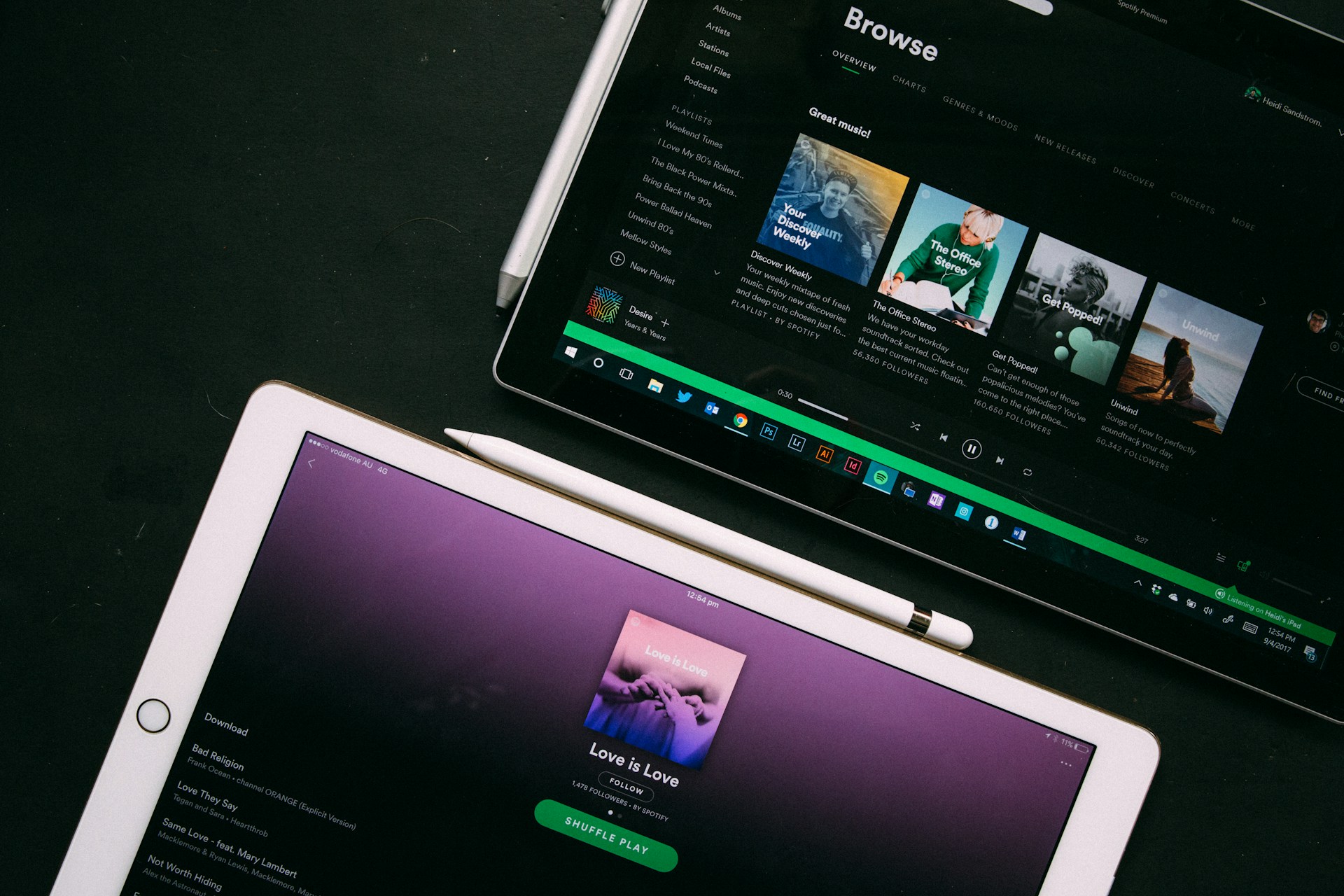
Spotify playlist marketing is useful when it puts your song in front of listeners who might care. It is dangerous when it turns into paying for passive streams, fake listeners, or playlists that make your data worse.
The problem is that both things can look good on the surface. A playlist add can create a satisfying spike. But if those listeners skip, never save, never follow, and never come back, the spike does not build much.
The goal is not "get on playlists." The goal is to use playlists as one part of a release system that creates real listener behavior.
Spotify Playlist Marketing: The Safe Version
Safe Spotify playlist marketing starts with official pitching, clear genre fit, transparent curator outreach, and measurement after the playlist add. It does not start with guaranteed streams.
A safe campaign should answer four questions before anyone spends money:
- Does this playlist or audience match the song?
- Can we tell where the listeners came from?
- Do those listeners save, follow, replay, or add the song to their own playlists?
- Will this campaign make the next release easier to promote?
If the answer is only "the stream count went up," you do not have enough evidence yet.
The three Spotify playlist types artists should understand
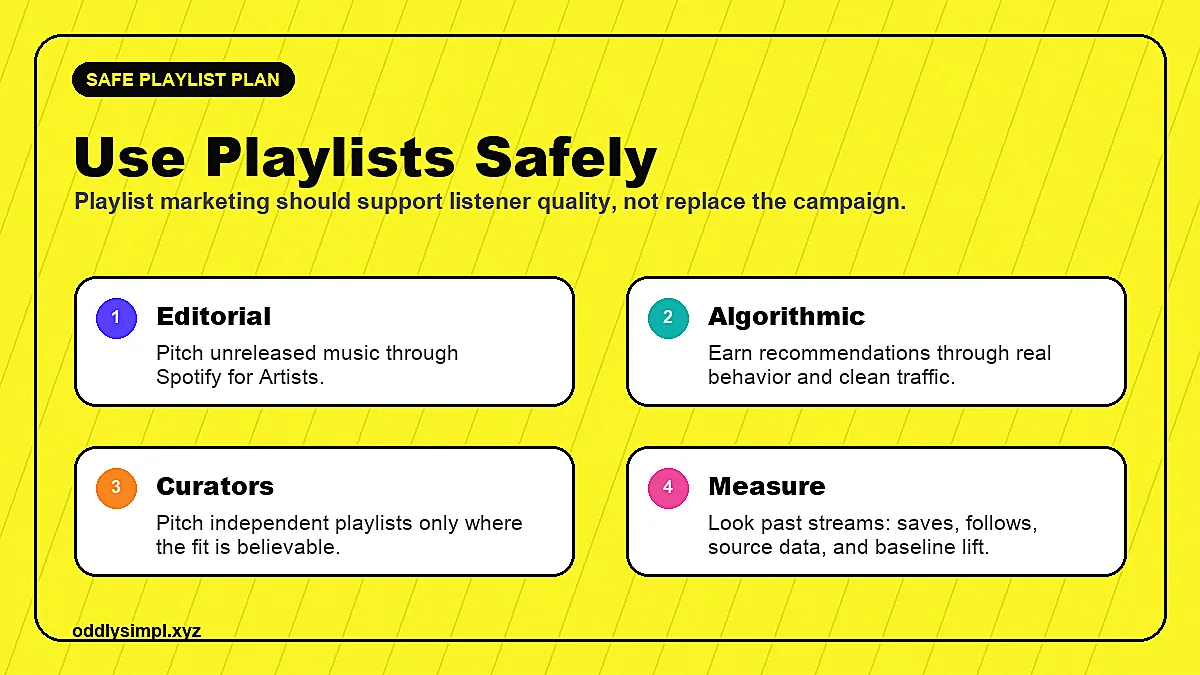
- Editorial playlists: Spotify-curated playlists pitched through Spotify for Artists before release. This is the official path for editorial consideration.
- Algorithmic playlists: Release Radar, Discover Weekly, Radio, autoplay, Daily Mix, and other personalized surfaces shaped by listener behavior.
- Independent curator playlists: third-party playlists run by people, brands, blogs, or communities outside Spotify.
Each type has a different job. Editorial can create visibility. Algorithmic playlists can compound when the listener data is clean. Independent curators can help when the playlist matches the song and the audience is real.
How to pitch Spotify editorial playlists
Use Spotify for Artists to pitch an upcoming, unreleased song. Spotify says that if you pitch at least 7 days before release, the song can be added to your followers' Release Radar. In practice, earlier is better because it gives you more time to prepare the release and write a thoughtful pitch.
A useful editorial pitch should explain:
- what the song sounds like and where it fits
- the real story behind the release
- genre, mood, instruments, culture, and audience context
- any meaningful momentum, press, touring, creator activity, or fan response
- why this song matters now
Do not write like you are begging a mysterious gatekeeper. Write like you are helping an editor understand what the song is, who it is for, and why listeners would care.
How algorithmic playlists grow
Algorithmic playlisting is not a button you press. It is a feedback loop.
Spotify watches how people respond: saves, follows, repeat streams, skips, playlist adds, profile visits, source of streams, and whether similar listeners behave the same way. That is why clean traffic matters more than a random spike.
For the deeper version, read the Spotify algorithmic playlist guide.
Spotify Playlist Submission vs Playlist Marketing
Spotify playlist submission is one action: sending a song for editorial review or curator consideration. Spotify playlist marketing is the larger campaign around that action.
| Term | What it means | What to measure |
|---|---|---|
| Playlist submission | Pitching a song through Spotify for Artists, SubmitHub, Groover, curator forms, or direct outreach | Acceptance rate, curator fit, feedback quality |
| Playlist marketing | Using playlists as part of a release plan with content, ads, fan follow-up, and analytics | Saves, follows, repeats, source quality, algorithmic lift |
| Playlist promotion service | A third party offering campaign support, curator access, or placement outreach | Transparency, no guarantees, listener quality, reporting |
Submission is useful. Marketing is what turns the result into learning.
How to judge independent playlist opportunities
Independent playlists are not automatically bad. Some are real communities. Some are low-quality stream farms wearing a hoodie.
Before pitching or paying any platform, look for:
- Genre fit: does your song belong there?
- Listener quality: do listeners save, follow, replay, or only passively stream?
- Follower-to-stream pattern: does the playlist look inflated compared with its engagement?
- Transparency: can you see what is being promised and what is not?
- No guarantees: guaranteed streams or guaranteed paid playlist placement should be treated as a red flag.
Spotify's own guidance is clear that paid third-party services guaranteeing streams are not legitimate, and services claiming guaranteed playlist placement in exchange for money should not be used.
Spotify playlist marketing options compared
Do not treat every playlist tactic like it solves the same problem. The safer move is to match the tactic to the kind of signal you need.
| Playlist tactic | Best use | Main risk |
|---|---|---|
| Spotify editorial pitch | Official release consideration and follower Release Radar support | Artists treat it like the whole strategy and ignore content, fans, and follow-up |
| Algorithmic playlist growth | Compounding discovery from saves, follows, repeat listening, and clean audience signals | Bad traffic can teach Spotify the wrong audience for the song |
| Independent curator pitching | Niche discovery when the playlist has real listeners and genre fit | Passive streams, inflated playlists, or guaranteed-placement offers |
| Submission platforms | Organized outreach and feedback across curators, blogs, and tastemakers | Artists confuse consideration with a complete release campaign |
| Ads plus smart links | Controlled audience testing and listener-quality learning | Cheap clicks that do not become saves, follows, or repeat listeners |
If you are comparing platforms, use the Playlist Push alternatives guide. If you want the full risk breakdown, start with legit Spotify promotion services.
What to measure after a playlist add
A good playlist add should leave useful evidence behind. Watch:
- saves per listener
- followers gained
- streams per listener
- skip behavior where available
- profile visits
- personal playlist adds
- algorithmic movement after the placement
- whether Fans Also Like starts making more or less sense
If a playlist creates streams but no other listener behavior, treat it as a weak signal. If it creates saves, follows, repeats, and algorithmic lift, it may be worth building around.
A safer Spotify playlist marketing plan
- Submit every eligible release through Spotify for Artists.
- Build followers before release day so Release Radar has something to work with.
- Use content to explain why the song matters.
- Pitch independent curators selectively, not desperately.
- Avoid guaranteed streams and guaranteed paid placements.
- Use music analytics to judge listener quality.
- Use ads when you need controlled audience testing instead of mystery traffic.
For a more tactical submission workflow, read how to submit music to Spotify playlists. For a broader risk breakdown, read the Spotify promotion services guide.
Spotify Playlist Marketing FAQ
What is Spotify playlist marketing?
Spotify playlist marketing uses editorial pitching, algorithmic listener signals, curator outreach, content, and ads to help the right listeners find a song without relying on fake streams.
Is Spotify playlist promotion worth it?
It is worth it when the campaign creates saves, follows, repeat listening, personal playlist adds, and cleaner algorithmic signals. A stream spike by itself is weak proof.
What is the difference between editorial, algorithmic, and independent Spotify playlists?
Editorial playlists are curated by Spotify. Algorithmic playlists are personalized by listener behavior. Independent playlists are run by curators, brands, blogs, or communities outside Spotify.
Are guaranteed Spotify playlist placements safe?
Guaranteed playlist placements and guaranteed streams are risk signals. Safer campaigns focus on official pitching, real curator fit, transparent reporting, and listener-quality metrics.
If you want help building a Spotify campaign that does not depend on sketchy playlist spikes, start with simpl's Spotify ads for artists. We help artists test real listeners, read the data, and build momentum that can survive after the playlist add fades.
Keep building the strategy
-
Submit music to Spotify playlists
Use the tactical guide for editorial pitching, independent curators, and safer playlist submissions.
-
Spotify promotion services
Know which playlist and promotion offers are legit, risky, or worth avoiding.
-
Music analytics
Judge every playlist add by saves, follows, repeat listens, and listener quality.
About the author

Anthony Pacheco
Anthony Pacheco is the founder of simpl., a former Sony Music analyst, and a Billboard-charting musician who has helped run 750+ artist marketing campaigns. He writes about real listener behavior, release systems, Spotify ads, and how artists can grow without fake playlist traffic.