Spotify · Updated July 10, 2026
Spotify Editorial Playlist: How to Get On One
A Spotify editorial playlist can help a release reach the right listeners, but the only official pitch path starts inside Spotify for Artists.
You get editorial consideration by pitching an upcoming, unreleased song. There is no paid shortcut, no secret email, and no legitimate service that can guarantee editorial placement.
That does not mean the pitch is random. A good pitch gives Spotify's editors context. A good release campaign gives the song better data around it. You need both.
What Is a Spotify Editorial Playlist?
A Spotify editorial playlist is a playlist curated by Spotify's editorial team. Editors use these playlists to program songs by genre, mood, culture, activity, region, and listener moment. Some editorial playlists also personalize parts of the song pool for each listener.
Artists get considered through Spotify for Artists, and the song must be unreleased when you submit it for consideration.
How to Get on a Spotify Editorial Playlist: Short Answer
To be considered for a Spotify editorial playlist, submit one unreleased song through Spotify for Artists before release day. Spotify says pitching at least 7 days before release can also get that song into your followers' Release Radar. If you can pitch earlier, do it earlier.
Then build the rest of the release around real listener behavior: saves, follows, repeat listening, profile visits, and clean traffic from people who fit the song.
Submit to Spotify Editorial Playlist: Official Path
Submit the track from Spotify for Artists after your distributor delivers the unreleased song and before the pitch deadline closes. Choose one song, complete the metadata, and use the pitch field to explain the track's sound, listener, story, and release support.
Do this even if you do not expect a playlist add. Pitching early can help follower Release Radar, and the discipline forces you to explain the release in plain language before promotion starts.
How to Write a Better Spotify Editorial Pitch
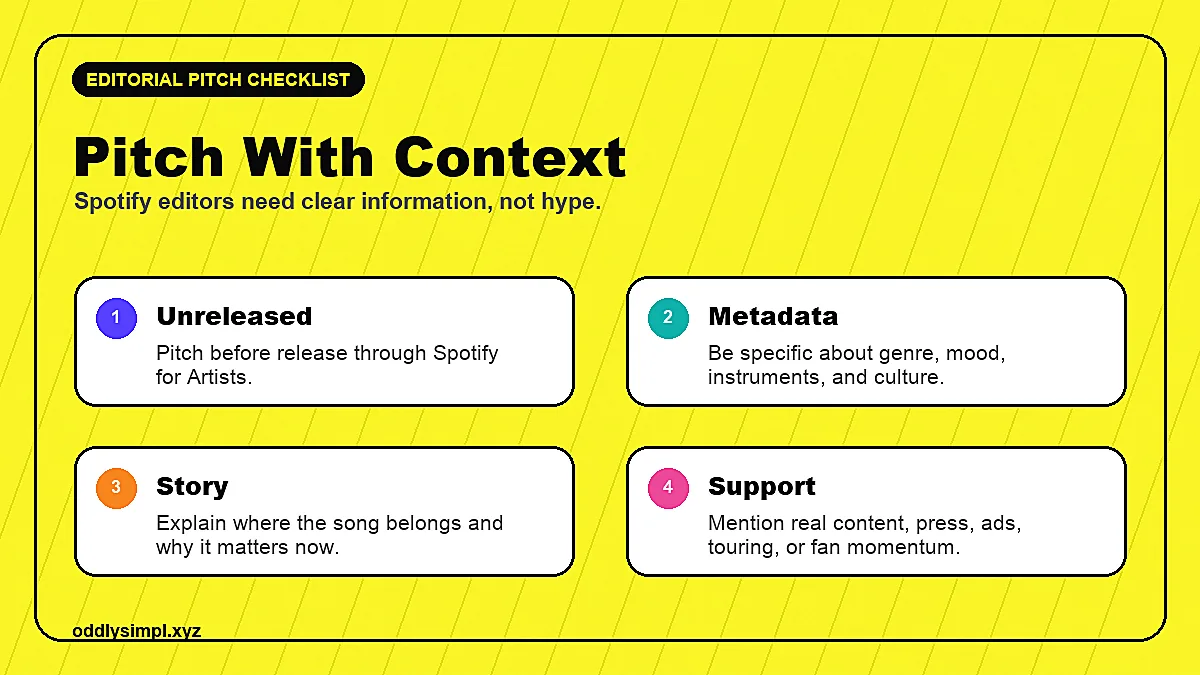
Your pitch should help an editor understand the song quickly. Do not write a press release. Do not write a desperate paragraph about how hard you worked. Be specific.
- Genre and subgenre: say where the song belongs.
- Mood and moment: workout, late-night drive, heartbreak, party, focus, rage, nostalgia, whatever is true.
- Similar artists: name realistic reference points, not only superstars.
- Story: explain the emotional or cultural context in plain language.
- Release plan: mention video, content, shows, press, creator activity, ads, or community push if it is real.
- Momentum: include meaningful listener growth, past playlist support, touring, press, or fan data without inflating it.
A weak pitch says, "This is my best song yet." A stronger pitch says, "This is a melodic alt-pop track for fans of X and Y, built around a late-night breakup hook, supported by a short-form content series and a 30-day listener campaign in Los Angeles, Chicago, and Toronto."
Spotify Editorial Playlist Pitch Template
Use the pitch box to make the editor's job easier. Keep it specific and short enough to read in one pass.
| Pitch piece | What to write |
|---|---|
| Sound | Genre, subgenre, mood, instruments, and realistic similar artists. |
| Story | The lyric, scene, moment, or emotion that makes the song easy to place. |
| Audience | Who the song is for and where those listeners already spend time. |
| Support | Content, shows, press, creators, email, ads, or community activity that is already planned. |
| Proof | Only the clean proof: saves, followers, cities, press, shows, playlist history, or fan response. |
If the release does not have a clear story yet, fix the music release strategy before you try to make the editorial pitch sound bigger than it is. If you need the broader playlist context, read the Spotify playlists 101 guide.
Spotify Editorial Playlist Pitch Checklist
Before you submit the pitch, check the boring details. Editors cannot fix a rushed release setup for you.
- Pitch one unreleased track: choose the song with the clearest audience and strongest release plan.
- Submit early: Spotify recommends at least 7 days before release, but earlier gives you more room to fix delivery or metadata issues.
- Clean up the profile: photos, bio, Artist Pick, Canvas, merch, tour dates, and links should match the release.
- Write like a human: describe the song, listener, story, and support in plain language.
- Prepare the follow-up: content, smart links, ads, email, and fan asks should not wait until release morning.
The pitch is easier to write when the release already has a point of view. If you cannot explain who the song is for, fix that before you try to impress an editor.
What to Prepare Before Pitching
- Upload the release early enough that it appears in Spotify for Artists before the deadline.
- Finish your Spotify profile: photos, bio, Artist Pick, Canvas, merch, tour dates if relevant.
- Make sure the metadata, genre, mood, language, and credits are clean.
- Build pre-release content so the song has context before it drops.
- Give existing fans a clear reason to follow you on Spotify before release week.
The pitch is one piece of the campaign. If the artist profile looks abandoned and nobody is talking about the song anywhere else, the pitch has less to work with.
Does Pitching Help Release Radar?
Spotify says that pitching a song at least 7 days before release can get that song into your followers' Release Radar. That does not mean every follower will hear it, and it does not guarantee editorial playlist placement.
This is why follower quality matters. A small group of real followers who save, replay, and listen in your genre is more useful than a larger follower count built from giveaways, fake traffic, or people who do not care about the music.
If follower growth is part of the release plan, read how to get more Spotify followers before the next pitch window closes.
What Moves the Needle
No outsider can promise editorial placement. Artists with better chances have a cleaner story and stronger surrounding signals.
- Audience fit: Spotify can understand who the song is for.
- Real listener behavior: saves, follows, repeats, and profile visits are moving in the right direction.
- Release consistency: the artist is not appearing out of nowhere once every two years.
- External demand: content, shows, press, creators, email, or ads are driving real attention.
- No fake traffic: the data is not polluted by guaranteed streams or suspicious playlist placements.
Editorial Playlists vs Algorithmic Playlists
Editorial playlists are curated by Spotify teams. Algorithmic playlists are personalized based on listener behavior. Both matter, but most independent artists should not build the whole release strategy around getting one editorial add.
Algorithmic surfaces like Release Radar, Radio, autoplay, and Discover Weekly can keep working after release week if the song earns the right behavior. The Spotify algorithmic playlist strategy deserves as much attention as the editorial pitch.
What Not to Do
- Do not pay anyone who guarantees Spotify editorial placement.
- Do not buy guaranteed streams to make the song look bigger.
- Do not pitch vague superstar comparisons with no useful context.
- Do not wait until the last minute if you can avoid it.
- Do not treat a rejection as proof the release failed.
The Realistic Strategy
Pitch every eligible release. Make the pitch specific. Build followers before release week. Use content to create context. Use clean ads when you need controlled listener testing. Measure saves, follows, source quality, and repeat listening after the pitch.
What to Do After You Submit the Pitch
Do not wait around refreshing Spotify for Artists. Use the pitch deadline as the start of the campaign.
- Post content that teaches people why the song matters before it drops.
- Ask warm fans to follow on Spotify before release week.
- Build one smart link so every platform points to the same campaign.
- Prepare release-day posts, email, and comments you can reply to with new videos.
- Track saves, follows, source of streams, playlist adds, and repeat listening after launch.
A playlist add is a bonus. The campaign still needs to work if the pitch gets ignored.
For the full playlist workflow, read how to submit music to Spotify playlists. For riskier promotion offers, read the Spotify promotion services guide. After the release goes live, use music analytics to judge saves, follows, sources, and repeat listening instead of treating the pitch result as the whole campaign.
Spotify Editorial Playlist FAQ
How do you get on Spotify editorial playlists?
Pitch one upcoming unreleased song through Spotify for Artists before release day. Use the pitch to explain the song's genre, mood, story, audience, and real release support.
What is a Spotify editorial playlist?
A Spotify editorial playlist is a playlist curated by Spotify's editorial team. Artists cannot buy placement. The official way to get considered is to pitch an unreleased song through Spotify for Artists before release day.
Can you pay to get on a Spotify editorial playlist?
No legitimate service can guarantee editorial placement. If someone sells guaranteed editorial access, guaranteed streams, or guaranteed placement, treat it as a risk signal.
What should a Spotify editorial pitch include?
Include the song's genre, subgenre, mood, similar artists, story, release plan, and any support that already exists, such as content, shows, press, creators, or ads.
Does pitching to Spotify guarantee Release Radar?
No. Spotify says pitching at least 7 days before release can get the song into followers' Release Radar, but follower reach, streams, and playlist placement are not guaranteed.
If you want help building the listener data around your next pitch, start with simpl's Spotify ads for artists. We help independent artists create cleaner release campaigns instead of praying for one playlist add to do all the work.
Keep building the strategy
-
Submit music to Spotify playlists
Use the full workflow for editorial pitching, curator submissions, and playlist safety.
-
Spotify algorithmic playlists
Build the listener behavior that can keep working after release week.
-
Spotify ads for artists
Create cleaner listener data around your next editorial pitch.
About the author

Anthony Pacheco
Anthony Pacheco is the founder of simpl., a former Sony Music analyst, and a Billboard-charting musician who has helped run 750+ artist marketing campaigns. He writes about real listener behavior, release systems, Spotify ads, and how artists can grow without fake playlist traffic.