Marketing Strategy · Updated July 3, 2026
How to Sell Music Merch: A Guide for Artists
Music merch works when it feels like part of the artist world, not a random logo printed on a shirt. Fans buy because the item says something about the song, the scene, the show, or the version of themselves they connect to through the music.
Quick Answer: How Do Artists Sell Music Merch?
Artists sell music merch by matching the product to the fanbase, making the store easy to buy from, launching merch around moments fans already care about, and promoting it through email, SMS, social content, live shows, Discord, smart links, and retargeting ads. The best merch strategy is not "put a logo on a shirt." It is giving fans a physical way to participate in the artist world.
If you are early, start small: one great shirt, hoodie, poster, hat, vinyl/CD bundle, or limited drop beats a giant store full of random products nobody asked for.
Understanding Your Audience for Better Merch Sales
Good music merch starts with the fans you already have. Look at what they comment on, what they wear to shows, which lyrics they repeat, which visuals they repost, and which songs create the strongest reactions.
Use simple research before ordering inventory: Instagram polls, Discord feedback, email replies, show-table conversations, and past store data. The goal is to learn what your fans would wear, hang, collect, or gift before you spend money on boxes of merch.
Limited items work best when the reason is real: a release week, tour run, anniversary, inside joke, or design tied to a specific song. Fake scarcity feels cheap. A drop with a story gives fans a reason to move now.
Best Music Merch Ideas for Independent Artists
Use this as a starting point before ordering inventory:
| Merch item | Best for | Risk |
|---|---|---|
| T-shirts | First merch drop, live shows, simple artist branding | Size inventory can get messy |
| Hoodies | Higher price point and stronger fan identity | More expensive to produce |
| Hats/beanies | Minimal designs, streetwear-friendly artists | Fit and style preferences vary |
| Posters/prints | Album art, tour moments, limited editions | Shipping protection matters |
| Vinyl/CD/cassette bundles | Collectors and superfans | Longer production timelines |
| Stickers/buttons | Low-cost show table add-ons | Low margin unless bundled |
| Limited bundles | Release week, tour launch, anniversary drops | Needs clear scarcity and timing |
The best-selling band merch feels specific to the artist, song, scene, or inside joke. Generic logo merch can work once fans already love you. Early on, story-driven merch tends to sell better.
Where to Sell Band Merch Online
For most artists, the main options are:
- Shopify: best when you want control, pixels, email/SMS integrations, bundles, and a real store.
- Etsy: useful for handmade, niche, or design-forward merch, but less ideal as your main artist store.
- Bandcamp: strong for music-plus-merch bundles and fans who already buy directly from artists.
- Print-on-demand: useful for testing designs without inventory risk, but margins and quality control vary.
- Tour/show table: still one of the highest-converting merch channels because the emotional moment is fresh.
Do not choose a platform only because it is easy to set up. Choose the platform that lets you learn who bought, what they clicked, and how you can reach them again.
Use Digital Platforms to Promote Music Merch
Put the merch where fan intent already exists. Add the store link to your artist site, smart link, Spotify profile when eligible, link-in-bio, YouTube descriptions, email footer, and Discord welcome message.
On TikTok, Reels, and Shorts, do not make every post feel like an ad. Show the design process, first sample, packaging, tour table, fan photos, failed versions, or the lyric/story behind the piece. The merch should feel like proof of the artist world, not a random product interrupting the feed.
Release-week merch works well when it supports the song: a lyric shirt, poster, vinyl bundle, cassette run, signed CD, or limited drop tied to the video. Use smart links for music and store analytics so you can see which content turns attention into buyers.
Launch Merch Like a Release
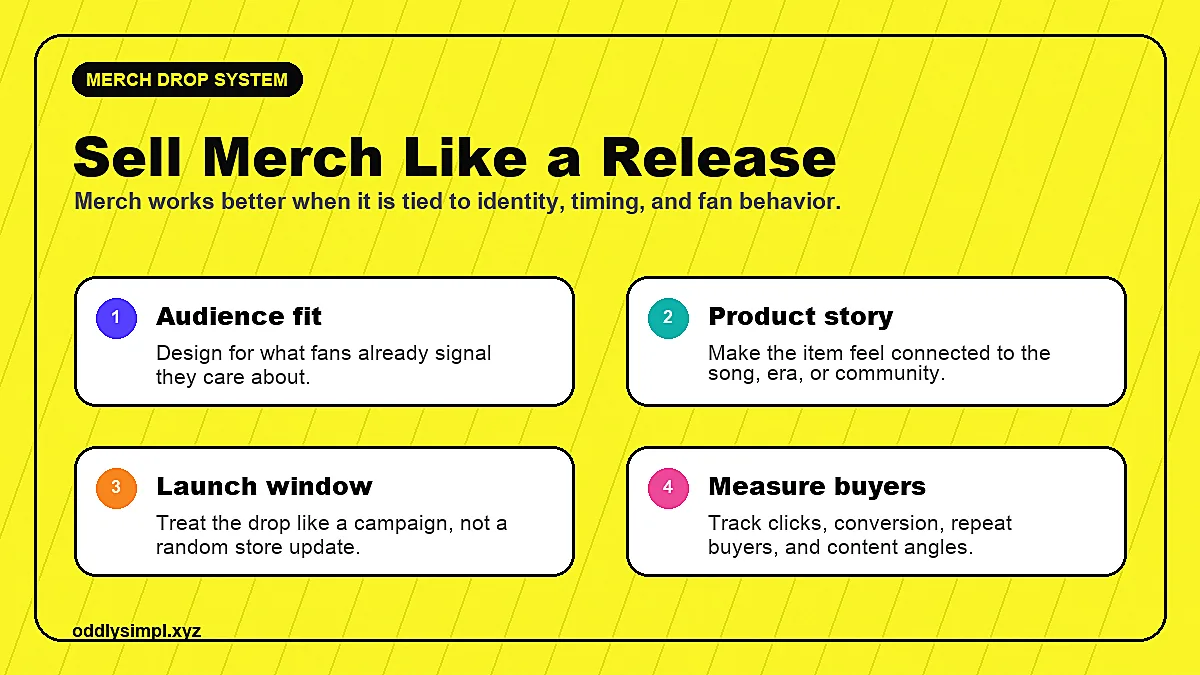
A merch drop needs a rollout, not only a store link.
- Tease the design: show sketches, samples, fabric, packaging, or the story behind the piece.
- Ask for input: let fans vote on colors, back print, or bundle options.
- Set the date: give the drop a real launch window.
- Use one clean link: send fans to the current merch priority, not a cluttered link-in-bio maze.
- Follow up: email buyers, repost fan photos, and turn the first drop into proof for the next one.
Use smart links, pixels, email, and store analytics so you know whether TikTok, Instagram, Discord, live shows, or ads drove buyers.
Collaborate Where the Audience Overlaps
Influencer merch only makes sense when the audience overlap is obvious. A creator who already talks about your scene, style, city, genre, or visual world is more useful than a bigger account with no reason to care.
Artist collaborations can work the same way. Split a limited design with a tour mate, producer, photographer, tattoo artist, local venue, or another band in the same lane. The best collabs feel like culture, not a logo swap.
Optimize Your Merch Store for Sales
Most fans will hit your merch store from a phone after seeing a post, story, show flyer, or link-in-bio. Make the buying path obvious: clean product photos, short descriptions, size chart, shipping expectations, payment options, and a checkout that does not fight the buyer.
Use bundles with intent. A shirt plus CD, hoodie plus poster, or vinyl plus signed lyric sheet can lift order value when the bundle feels like a fan package. Random discounts train people to wait. Better bundles make the purchase feel more complete.
How to Measure Music Merch Sales
Do not only track total sales. Track the fan behavior around the sale:
- Which channel drove the sale?
- Which city or country bought?
- Which product had the highest conversion rate?
- Which buyers also stream, attend shows, join Discord, or open emails?
- Which ad creative created buyers instead of cheap clicks?
Merch can become more than revenue. It can become proof of real fan demand. Pair your merch data with music analytics, the Discord fan community guide, and the make money as a musician guide so the business side of the artist project compounds.
Music Merch FAQ
How do artists sell music merch?
Artists sell music merch by matching the product to the fanbase, launching around moments fans care about, using one clean store link, promoting through content and email, and measuring which channels create real buyers.
What merch should musicians sell first?
Start with one strong item such as a shirt, hoodie, poster, hat, vinyl bundle, CD bundle, sticker pack, or limited release-week drop instead of ordering a large store full of untested products.
Where should artists sell band merch online?
Artists can sell band merch online through Shopify, Bandcamp, Etsy, print-on-demand tools, or a link-in-bio storefront. Shopify gives the most control, while Bandcamp is strong for music-plus-merch bundles.
How do you promote music merch?
Promote music merch like a release: tease the design, tell the story, set a launch date, use email or SMS, show the merch in real content, repost buyers, and retarget fans who engaged but did not buy.
If you want help connecting merch, content, ads, and listener data, work with simpl. We build campaigns around fan behavior artists can use again.
Keep building the strategy
-
Music marketing strategies
Build the full system around content, ads, release timing, and fan retention.
-
Music analytics
Use listener data to make better release, content, and ad decisions.
-
Spotify ads for artists
Turn the right listeners into repeat fans with a campaign built around your sound.
About the author

Anthony Pacheco
Anthony Pacheco is the founder of simpl., a former Sony Music analyst, and a Billboard-charting musician who has helped run 750+ artist marketing campaigns. He writes about real listener behavior, release systems, Spotify ads, and how artists can grow without fake playlist traffic.